
Comparison and decision guides
Are Oversized 6 Inch Gutters Worth It?
By the V&V Seamless Gutters crew · Published and updated November 1, 2026

Six-inch gutters are worth it on large or steep roofs, on long runs, and below roof valleys. They are usually not worth it on an average single-story house, where adding a downspout solves the overflow. In the 6 inch vs 5 inch gutters decision, check the outlets first, because a gutter drains only as fast as its downspouts.
6 inch vs 5 inch gutters: what actually changes?
The numbers go up by more than one inch suggests. A roofing contractor study guide lists a 5-inch K-style at about 3-1/4 inches deep, around 15 square inches of water area, holding about 0.8 gallon per foot. It lists a 6-inch K-style at about 4 to 4-1/4 inches deep, around 25 square inches, holding about 1.3 gallons per foot. Other published tables run lower or higher, and they differ by profile, so treat those as rough. The direction is not in doubt: a 6-inch gutter holds a good deal more.
| 5-inch K-style | 6-inch K-style | |
|---|---|---|
| Depth, roughly | 3-1/4 inches | 4 to 4-1/4 inches |
| Water held when full, roughly | 0.8 gallon per foot | 1.3 gallons per foot |
| Downspout pairing | 2x3 or 3x4 | 3x4 |
| Roof drained per downspout | About 600 sq ft (2x3) or 1,200 sq ft (3x4) | About 1,200 sq ft (3x4) |
| Look on the house | Standard, small profile | Larger face, more visible on low eaves |
| Best fit | Most single-story homes | Big roofs, steep pitches, valleys, long runs |
Overflowing in hard rain? Call for a free estimate and a written quote that compares both sizes.
- 4.5★ from 36 Google reviews
- Free estimates
- Run by owner Victor and his son Omar
How much rain does an Austin gutter have to handle?
Size for bursts, not for the 36.3 inches Austin gets in a normal year. NOAA Atlas 14 gives these rainfall depths for Austin City Hall. We converted them to flow for 1,000 square feet of roof, using the USGS figure of about 0.62 gallon per square foot per inch.
| Storm | Rain | Flow off 1,000 sq ft of roof |
|---|---|---|
| 2-year, 60 minutes | 1.97 inches | About 20 gallons a minute |
| 100-year, 60 minutes | 4.80 inches | About 50 gallons a minute |
| 10-year, 5 minutes | 0.80 inch | About 100 gallons a minute, for 5 minutes |
| 100-year, 5 minutes | 1.28 inches | About 160 gallons a minute, for 5 minutes |
That five-minute line is the one that overflows gutters. For reference, the International Plumbing Code table quoted in that study guide rates semicircular gutters at 1/8 inch per foot at 74 gallons a minute for 5 inches and 110 for 6 inches. K-style sections of the same width hold more than semicircular ones, but the comparison shows why heavy bursts can beat a modest gutter briefly, and why a roof section drained in two directions behaves better than one.
Should you add a downspout before upsizing?
Yes, in most cases. Add downspouts before assuming the gutter is too small. A 40-foot run with one outlet at the end sends all its water through one hole. Put an outlet at each end, and each carries half. We work to about one downspout per 30 feet rather than the common 40, and that often ends the overflow on a 5-inch system at much lower cost than a new gutter.
Check the simple causes first too: a clog, a lost slope, or a too-small 2x3 pipe. Changing a 2x3 to a 3x4 doubles the opening. New outlets are part of downspout installation, and that may be the whole job.
A five-minute outlet count
You can get most of the way to an answer with a tape and a sketch of the house.
- Work out the roof area feeding each gutter run, using the footprint under that slope plus the eaves.
- Count the downspouts on that run and note whether each is 2x3 or 3x4.
- Add up their capacity, at about 600 square feet for a 2x3 and about 1,200 for a 3x4.
- If the roof area is higher, add an outlet or go up a pipe size before touching the gutter.
- Mark any valley that lands on the run. That is where extra depth earns its cost.
Say a rear slope covers 1,800 square feet and drains through two 2x3 pipes. That is 1,200 square feet of capacity against 1,800 of roof. A third 2x3 or a switch to 3x4 pipes closes the gap, and the 5-inch gutter can stay.
When are 6-inch gutters worth it?
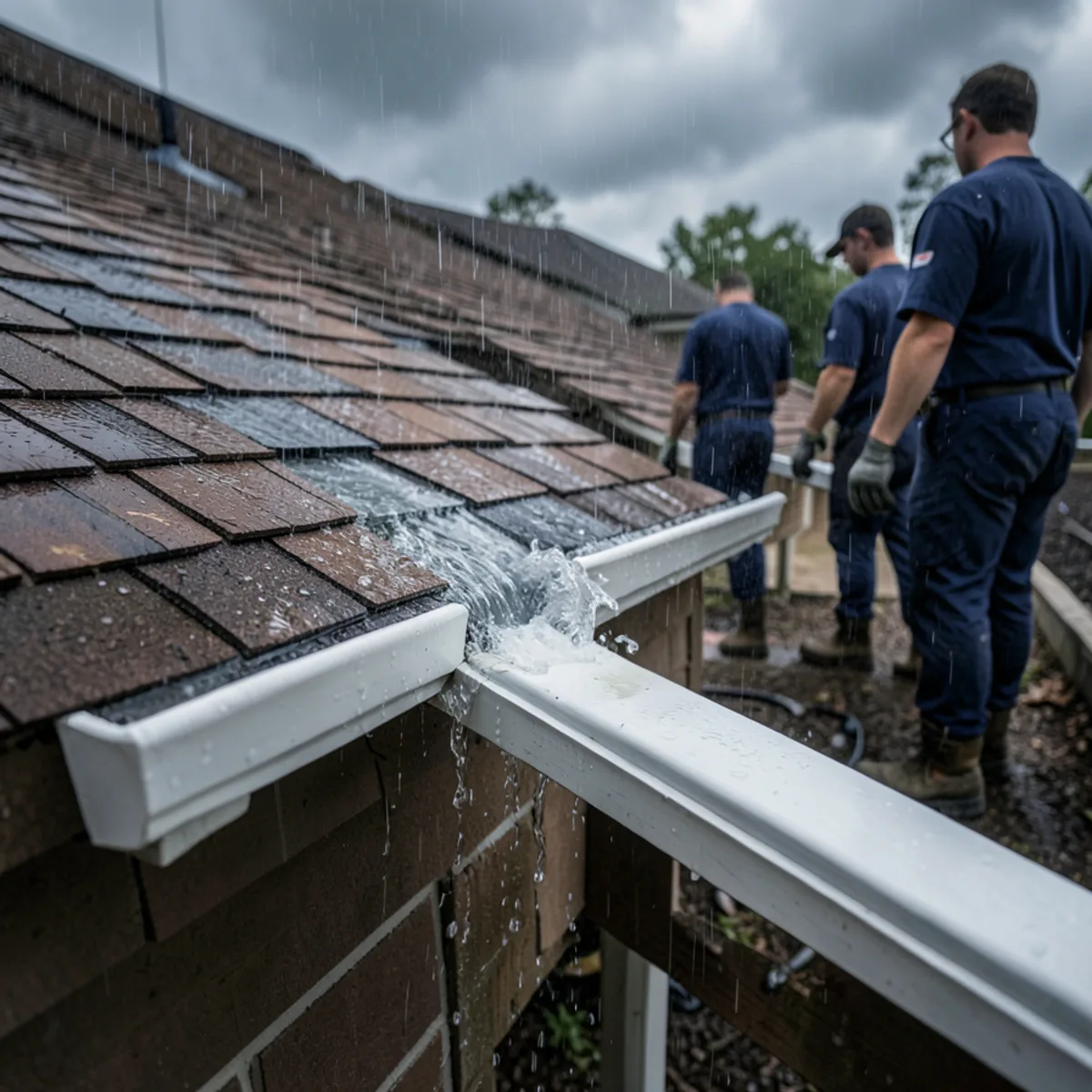
- Valleys. Where two roof planes meet, a stream hits one spot on the gutter and can shoot over the lip. Depth helps there.
- Steep roofs. Water arrives faster and with more force.
- Big single-plane roofs. Long, unbroken slopes feed a lot of area into one gutter.
- Runs with few outlet options. If you cannot add a downspout because of a door, window or patio, more capacity is the fallback.
- Metal roofs. Smooth panels shed water fast, so see metal roof gutters for details on that setup.
- Heavy debris. A wider trough and 3x4 outlets clog less readily than a tight 5-inch with 2x3 pipe, though both still need cleaning.
If two or more of those apply, price 6-inch gutters on at least the affected runs. You do not always have to do the whole house. Mixed sizes can work if the rear valley side needs the capacity and the front does not, though you should see how it looks at the transition.
When are they not worth it?
A typical single-story home with simple gable sections, clean gutters and well-placed outlets is rarely short on capacity. On a low eave, a 6-inch face can look heavy. If overflow happens only at one corner, or only in the rarest bursts, fix that corner rather than the whole system. More capacity also does nothing for discharge. The added gallons still have to land 6 to 10 feet from the foundation on clay.
Overflow at one corner: what the site visit usually finds
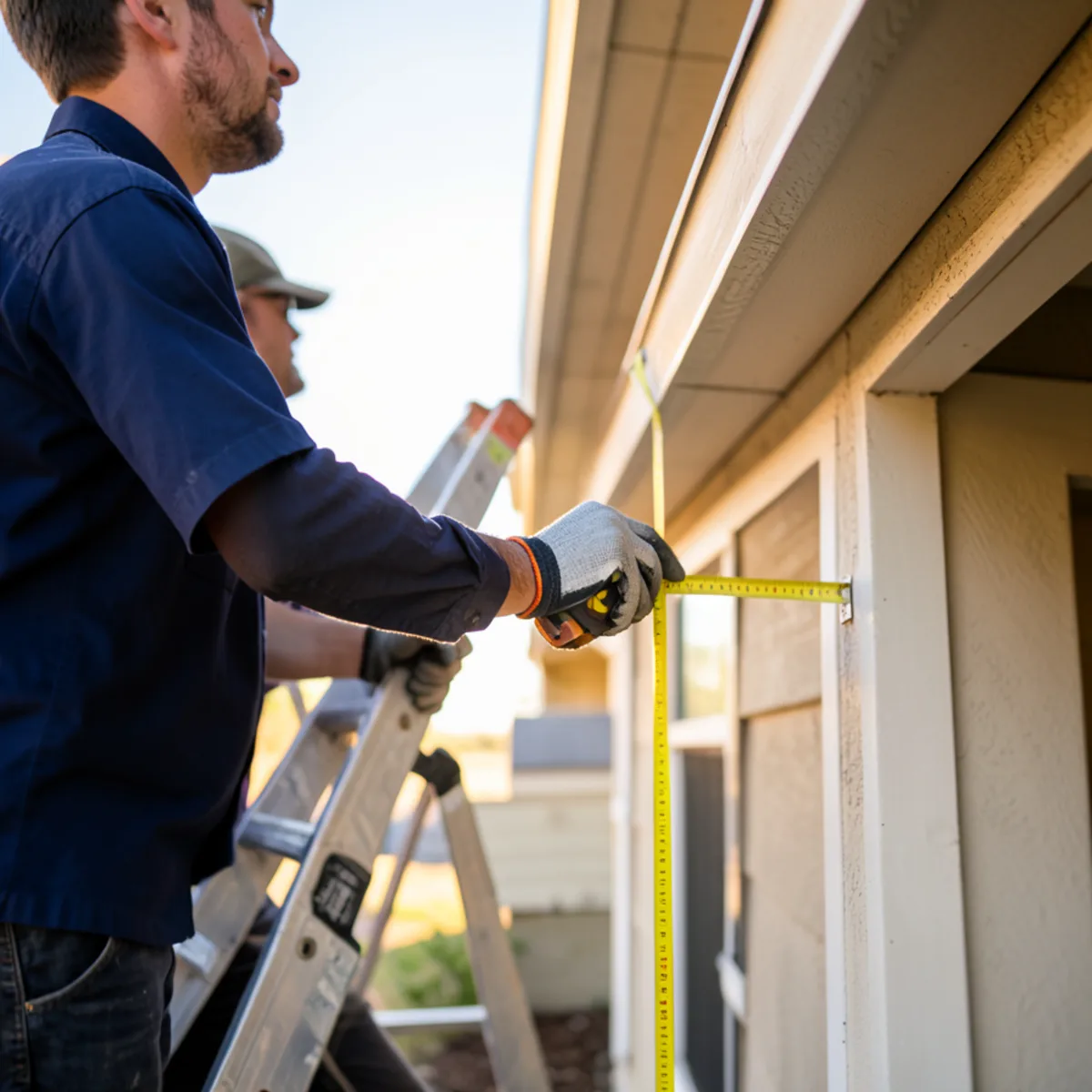
As a general pattern, the request starts with overflow at one place. The usual finding is a long run with one outlet, or a valley aimed at the far end of a 5-inch gutter. On newer houses in growing areas like Manor, adding outlets to a big roof section often solves more than upsizing would. On large two-story homes and rebuilt homes with long clean roof planes, 6-inch often is the right call from the start.
Gauge matters as well. We hang .027 aluminum as a minimum and offer .032 as the heavier option. On a bigger gutter that holds more water, ask which gauge your quote uses. A wider profile does not fix thin metal.
What upsizing asks of the house
More capacity means more weight. Using the same study guide figures and the USGS weight of water, a 30-foot 5-inch run filled to the top holds about 24 gallons, or 200 pounds. The same run in 6-inch holds about 39 gallons, or 325 pounds. Spread over hangers 24 inches apart, that is about 22 pounds each instead of 13. Sound fascia handles that. Tired fascia will not, so have the board checked before you upsize. The 3x4 pipe also sits wider on the wall, which matters on a narrow corner or beside a window.
What does the size difference cost?
Your own quote is the number to trust, because third-party figures rarely split out gutter size. Angi's Austin gutter guide lists a $4 to $10 per linear foot range for local installers. That figure is not specific to 6-inch, and it is not our price. The sensible way to compare is two line-item options on one written quote: same layout, same gauge, 5-inch and 6-inch.
Size the outlets, then the gutter
Six-inch gutters earn their place on the right roof. Before you pay for them, count your outlets, measure your runs, and find out whether the real limit is the gutter or the downspout. If you cannot tell which it is, call us. We will measure the runs, mark the outlets, and price both sizes on one written quote.
Sources
- Louisiana roofing contractor study guide, gutters and downspouts
- NOAA Atlas 14 Precipitation Frequency Data Server
- USGS Water Science School, how much water falls during a storm
- NOAA NCEI, U.S. Climate Normals 1991-2020
- Angi, gutter installation cost in Austin, TX
- USGS Circular 1268, conversion factors (8.34 pounds per gallon)
Common questions
Can I use 3x4 downspouts on 5-inch gutters?
Yes. A 5-inch K-style pairs with either 2x3 or 3x4 downspouts, and moving to 3x4 doubles the opening from 6 to 12 square inches. That often fixes overflow for far less than new gutters. The outlet in the gutter has to be cut to match, and the pipe sits a bit larger on the wall.
Do 6-inch gutters fit on any house?
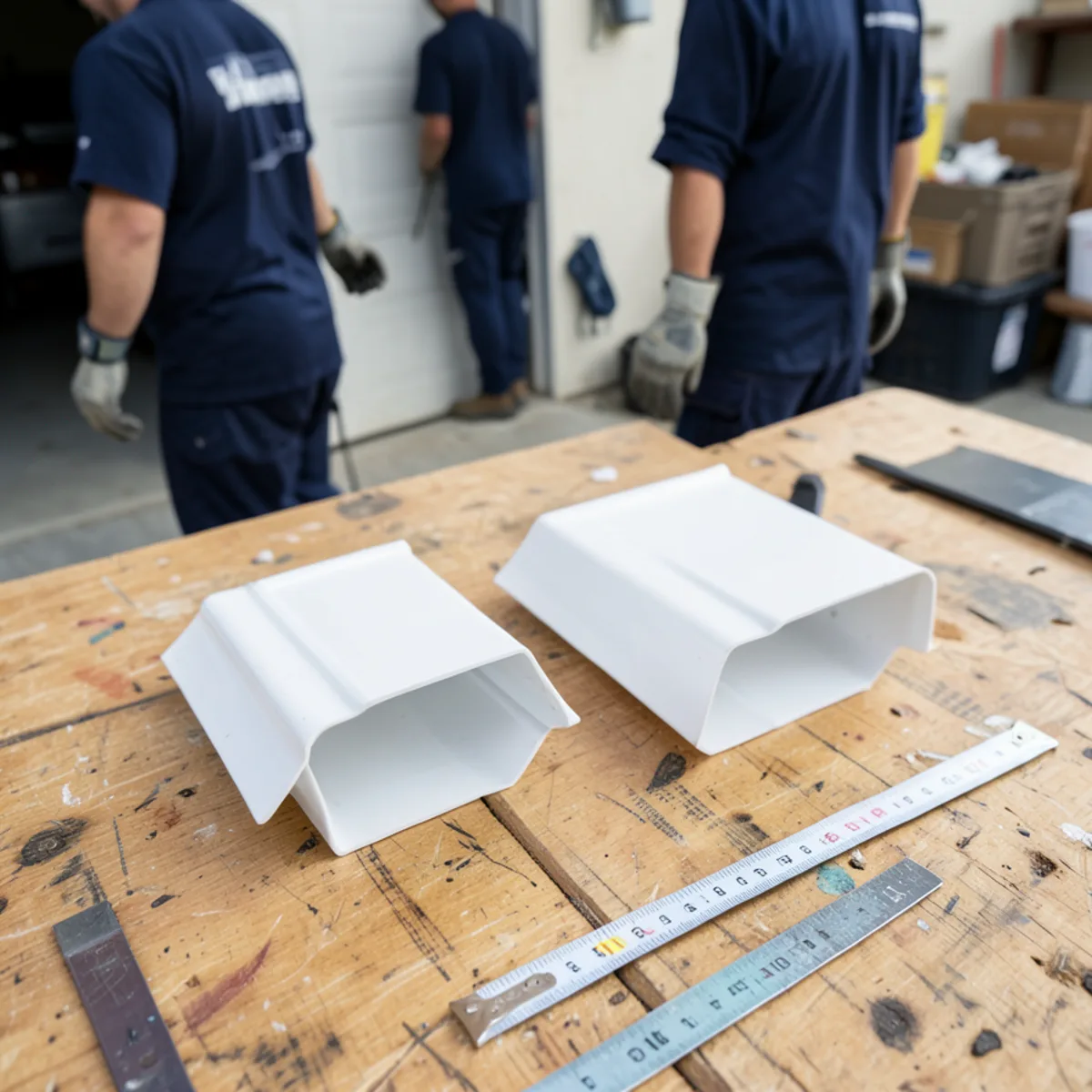
Yes, on most houses, as long as the fascia is sound and there is enough room at the roof edge. A full run holds more water, so it puts more load on the board and hangers. On low eaves they look larger. Hold a sample up to the eave before you decide, or ask to see one.
Are 6-inch gutters better for leaves?
Yes, somewhat. A wider trough and larger 3x4 outlet take longer to plug than a 5-inch gutter with a 2x3 pipe. They still fill up under oaks, and they still need regular cleaning. If debris is your only complaint, compare the cost against micro-mesh guards on 5-inch gutters before you change the whole system.
Will a 6-inch gutter stop a roof valley from overshooting?
Yes, in many cases. The extra depth gives a fast stream more room to slow down before it reaches the front lip. It works best with an outlet close to where the valley lands, so the water leaves quickly. On Austin's short, hard bursts, try that outlet on the existing gutter first if the run is otherwise sound.
About the author
Written by the crew at V&V Seamless Gutters, the Austin gutter company run by owner Victor and his son Omar. Read more about us or see what customers say.
Related service: 6 inch seamless gutters in Austin. We also work in Manor.
Have a gutter question this article did not answer?
- 4.5★ from 36 Google reviews
- Free estimates
- Run by owner Victor and his son Omar