

Lakeway is within our range, about 35 minutes in normal traffic from our South Austin base, out SH 71 to RM 620 and north. It started as something unusual for Travis County: a resort. The first hotel opened in July 1963 on old ranchland, and the city says the community began with retirees and second homes before it incorporated in 1974. The 2020 census counted 19,189 people, so it is a full town now. That resort history still shapes gutter work. Plenty of owners are away for stretches, and a clogged gutter on a house nobody is watching can run for months before anyone sees the stain.
Lakeway tree rules and the Lake Travis shoreline
Hill Country towns write their own rules, and Lakeway is no exception. Check these before planning around a tree or a drain:
- Protected trees. Lakeway's Design Manual defines a protected tree as any hardwood with a trunk 16 inches in diameter, measured 4.5 feet above natural ground. Removing one requires a tree removal permit from Building and Development Services. The city can also protect certain native or rare trees at any size.
- Oak pruning. The city bars oak pruning from February 1 through June 30. Exceptions for public safety or property damage need the City Forester's consent in advance, and all oak cuts must be sealed within 10 minutes.
- Permits. Austin's exempt-work list does not apply here, and neither does Austin's wildland-urban interface code. Ask Lakeway's Building and Development Services about your project.
- Neighborhood rules. Many hillside communities have HOA or property owner rules on exterior color. Check yours before you pick.
You know the anchors: Lake Travis, RM 620, Hurst Creek running through town into the lake, and the golf courses and marinas of the old resort. Addresses here usually read ZIP 78734 or 78738.
Lakeway MUD supplies water, wastewater and reuse service to most of the city, and in August 2026 it took over retail service in Rough Hollow and The Highlands. Other addresses sit with Travis County WCID 17 or Hurst Creek MUD, so check your bill. Old Lakeway is mostly on septic, so keep downspouts off the drain field. City Park and the Hamilton and Smith greenbelts keep trees close to many homes.
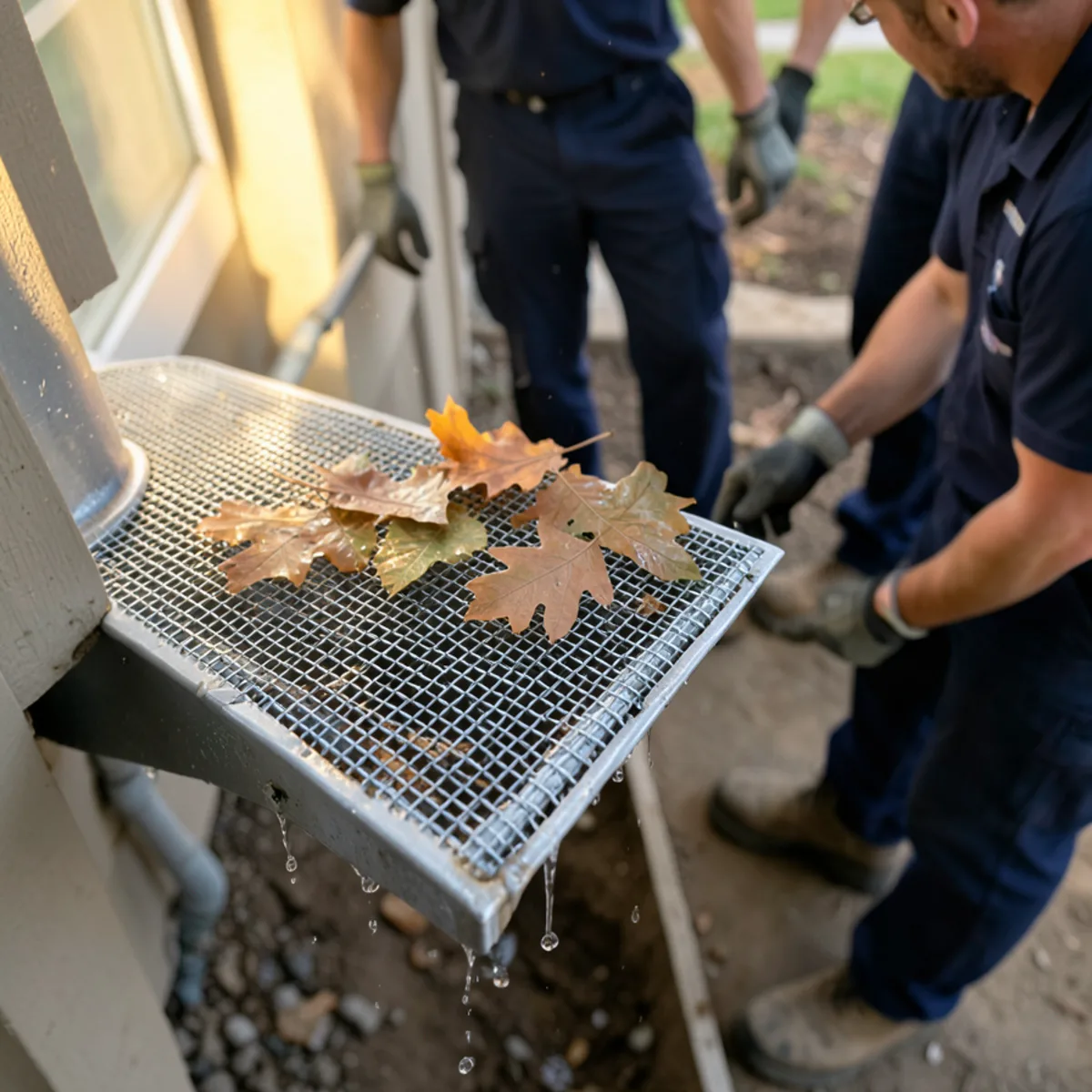
Who shows up and what happens at a hillside house
We meet on site for the free estimate, or arrange access if you are out of town. We measure linear feet, check the fascia, and mark downspouts with the slope in mind. Tall downhill walls and tight drives get noted up front, so the ladder plan and machine placement are settled ahead of time. A written line-item quote comes next, and the office can send it wherever you are.
On install day we remove old gutters, roll-form new ones at the house and hang them at the proper slope. If you are away, tell us when you call how you want to handle the walkthrough of the finished job and the discharge points.
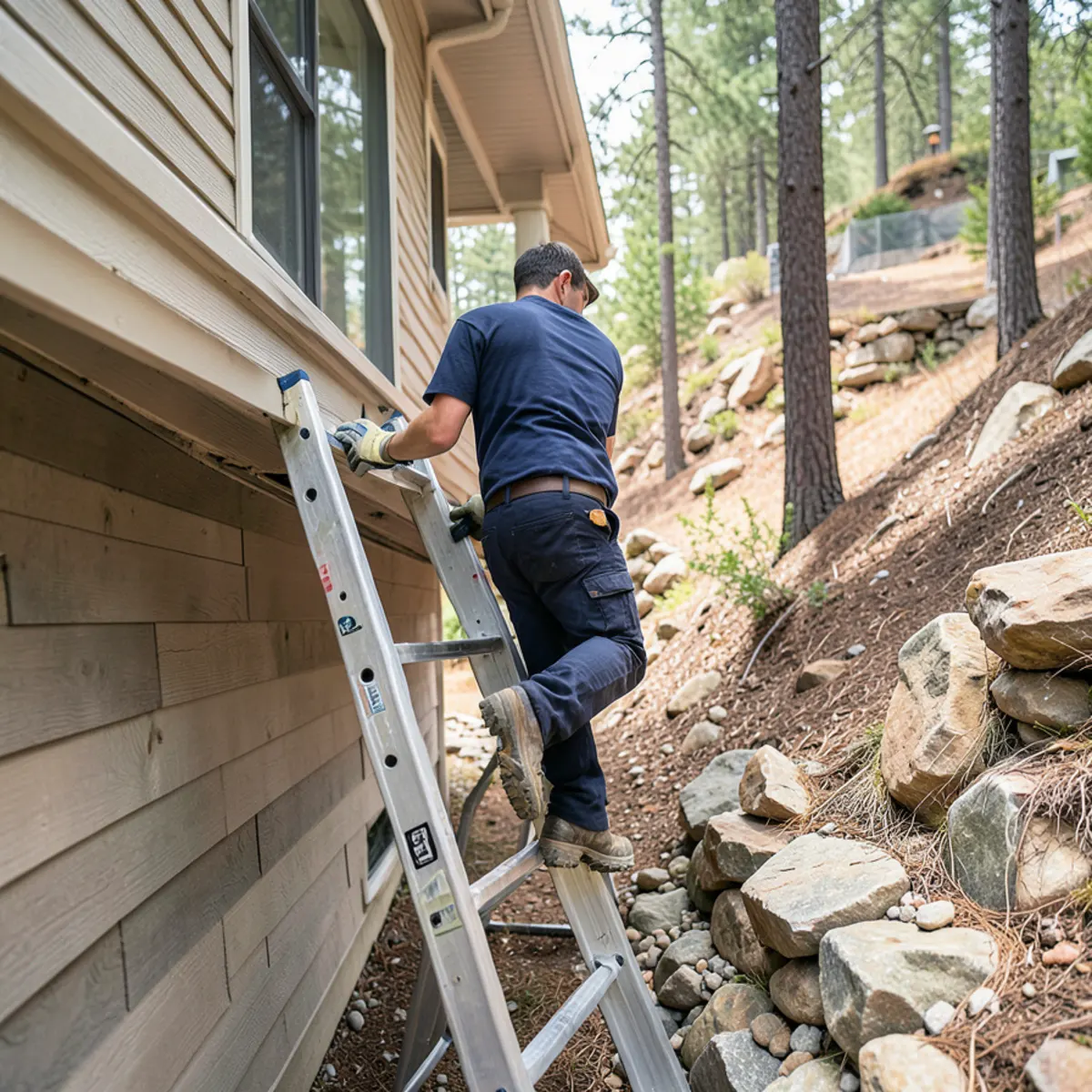
Cedar, oak and Brackett rock outcrop on steep lots
USDA soil maps show the ground around Lakeway as mostly Brackett and rock outcrop, on slopes that reach 30 percent to the north, with Volente silty clay loam on gentler ground. Shallow soil and exposed limestone do not absorb much. Downspouts on these lots should discharge onto rock, a splash pad or planted ground that can take it, and they should not undercut a drive or wall.
Hill Country storms move fast. In July 2025, floods took Lake Travis from 43 percent to 90 percent full within a month, by LCRA data. Rain on thin soil reaches the creeks quickly, so a downspout should not feed a drive or wall that already carries runoff.
Cedar here is Ashe juniper, which grows in extensive stands across Central Texas. Its fine litter and shredding bark slip through coarse screens that stop oak leaves, so micro-mesh guards usually do better than open screens. Oak drops its own load in spring. If you are gone for that season, book cleaning around your trip, not after you get home. West Virginia University Extension advises cleaning at least twice a year and after major storms, and homes under trees can need more.
The houses span six decades. Census estimates put about a quarter of housing units in the 1970s and 1980s, the old resort years, and nearly 60 percent in 2000 or later. Older sections may be ready for gutter replacement. Newer custom homes bring larger roofs, more valleys and long downhill eaves.
“They did a great job on installing gutters and leaf guards on my house. Their work was seamless. Very professional would recommend to anyone”
“…He responds to all your messages and solves your queries. I have talked with many other vendors before deciding to go with V&V. They were prompt on time, commitment and professional in their work.”
Lakeway gutter services that suit Lake Travis homes
- Residential gutter cleaning
Scheduled around second-home stays, so clogs do not sit for months. Book one visit after spring oak drop and one in fall, plus a look after storms.
- Micro-mesh guards
Stops fine cedar litter that passes through coarse screens. On a hillside home under Ashe juniper and oak, that means fewer climbs, though the mesh still needs a periodic rinse.
- Downspout unclogging
Long drops on tall downhill walls plug at the elbows first. A gurgle or a dry outlet after rain is the tell, and an empty house can hide it for months.
- Fascia and soffit repair
Unnoticed overflow on an empty house softens trim. We confirm scope on the estimate. A second home can go a season with a spilling corner, so that board gets checked first.
- Gutter replacement
For 1970s and 1980s resort-era homes on their original runs. Census estimates put about a quarter of Lakeway housing in those decades, past the 20 to 30 year aluminum listing.
- 6-inch K-style gutters
Newer custom homes bring larger roofs and more valleys. Where several planes feed one inside corner on a downhill eave, 6-inch with a 3x4 downspout gives the water more room.
Away from your Lakeway home for months? Call and set up a free estimate.
- 4.5★ from 36 Google reviews
- Free estimates
- Run by owner Victor and his son Omar
Sources
- City of Lakeway, About Lakeway
- City of Lakeway Design Manual, protected trees
- Census ACS 2020-2024 via Census Reporter
- USDA NRCS Web Soil Survey, Travis County
- City of Lakeway: Oak Pruning Schedule
- Lakeway MUD
- Lakeway MUD: Highlands Service Area Expansion
- Lakeway MUD: ODWW Project Timeline
- City of Lakeway: City Park
- Community Impact: Lake Travis area flood recovery (2025)
Lakeway gutter questions
How often should Lakeway gutters be cleaned?
At least twice a year, and more under heavy oak and cedar. West Virginia University Extension sets twice a year plus after major storms as the baseline. Here that usually means once after spring oak drop and once in the fall. If the home sits empty for long stretches, book around your absences so that a clog does not go unnoticed.
Can you work on my Lakeway home while I am away?
Yes, if we can agree on access and sign-off first. Gutters are outside the house, so most of the job needs a clear gate and driveway, not someone at home. We will send a written quote before any work and set up how you want to review it. Tell the office when you call so the plan fits your schedule.
Do I need a tree permit to clear limbs off my Lakeway roof?
Pruning and removal are different questions, so ask the city. Lakeway's Design Manual requires a tree removal permit for a protected tree, any hardwood at 16 inches in trunk diameter. It may also protect certain trees at any size. We do not do tree work. Talk to Building and Development Services and an arborist before limbs come down.
Will micro-mesh handle Lakeway cedar better than a screen?
Usually yes. Cedar litter is small, so it slips through the larger holes in common screens and packs into the gutter. Micro-mesh is a fine metal screen that keeps most of it on top, where rain and wind clear some of it away. You still need a periodic cleaning. On long downhill eaves, that smaller workload is worth a look.