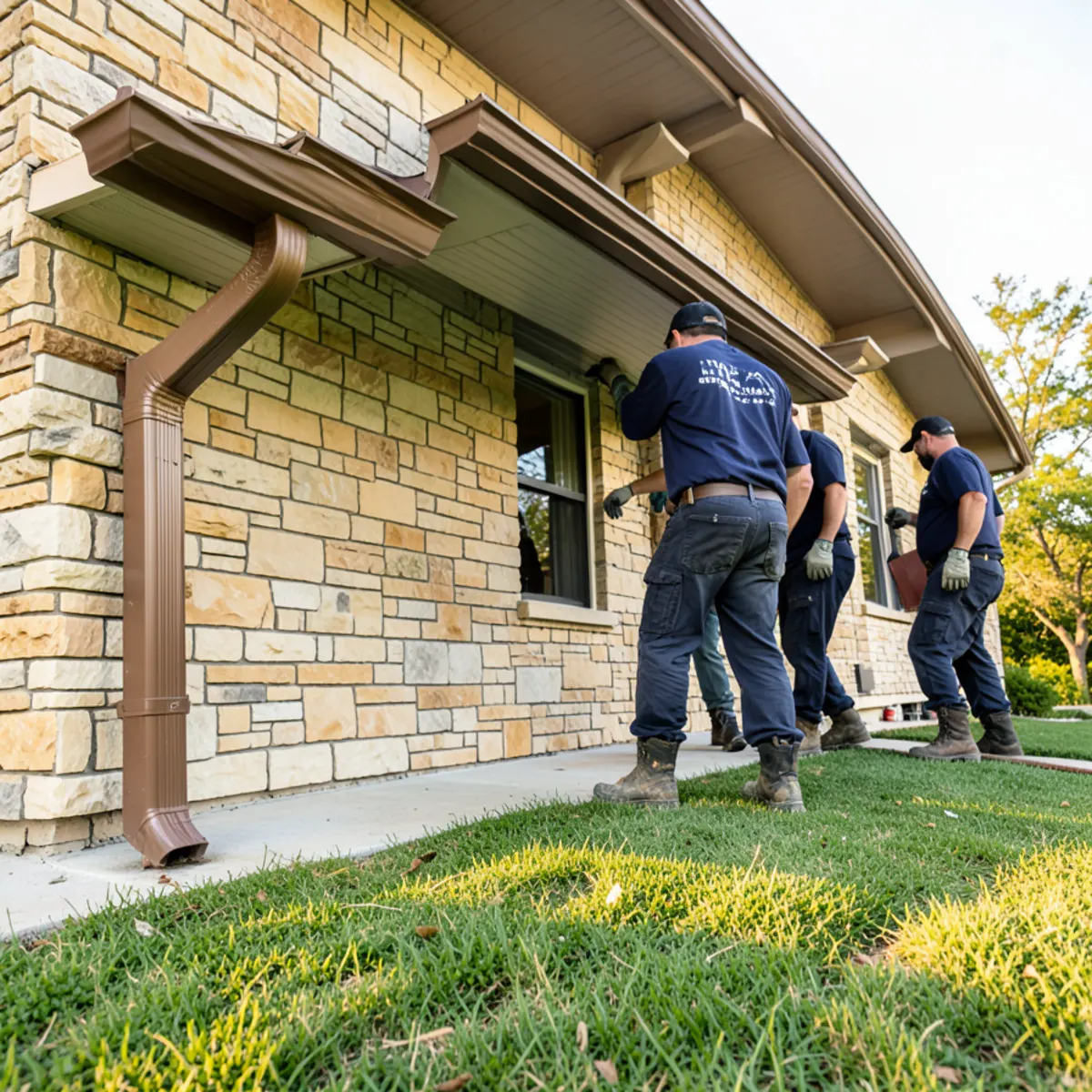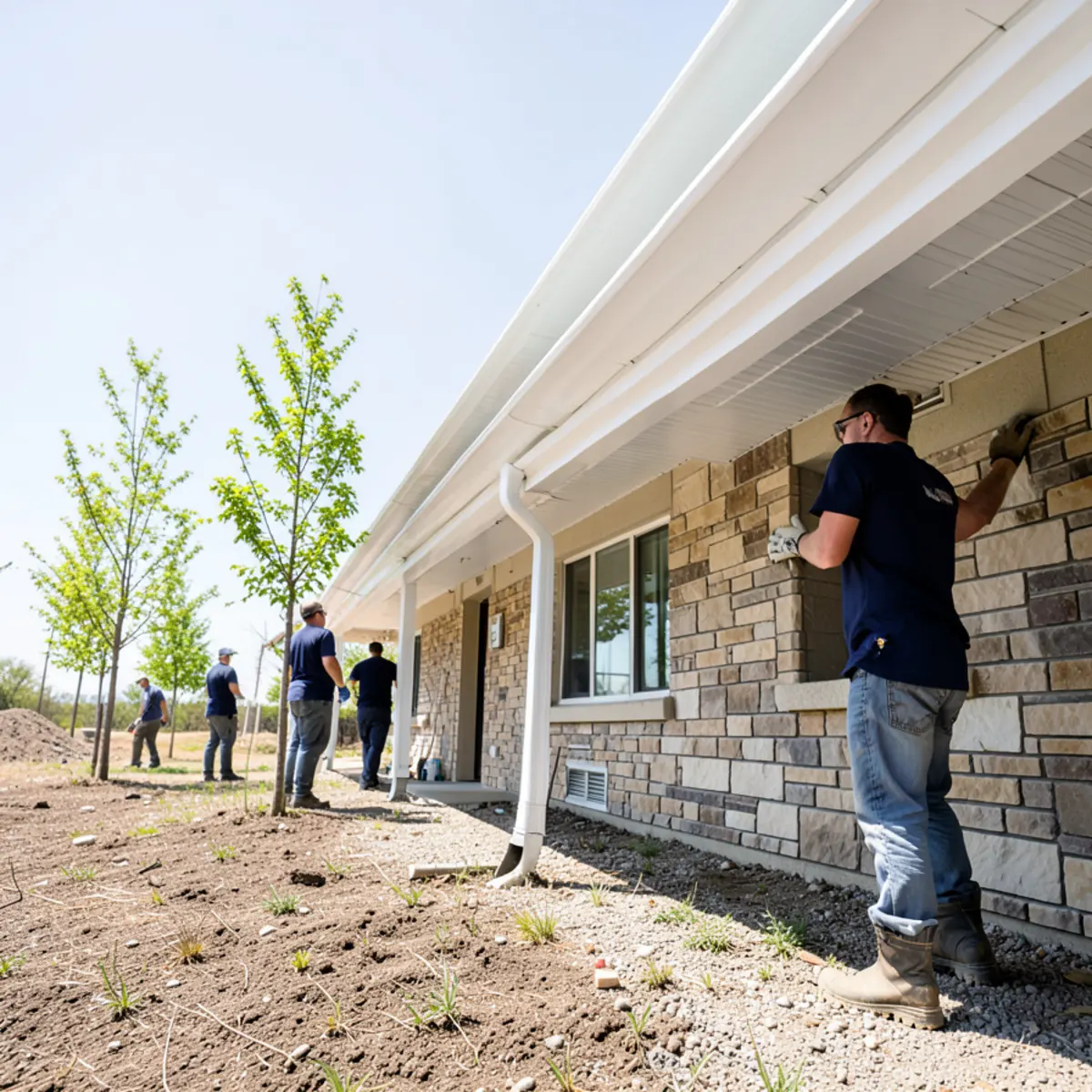
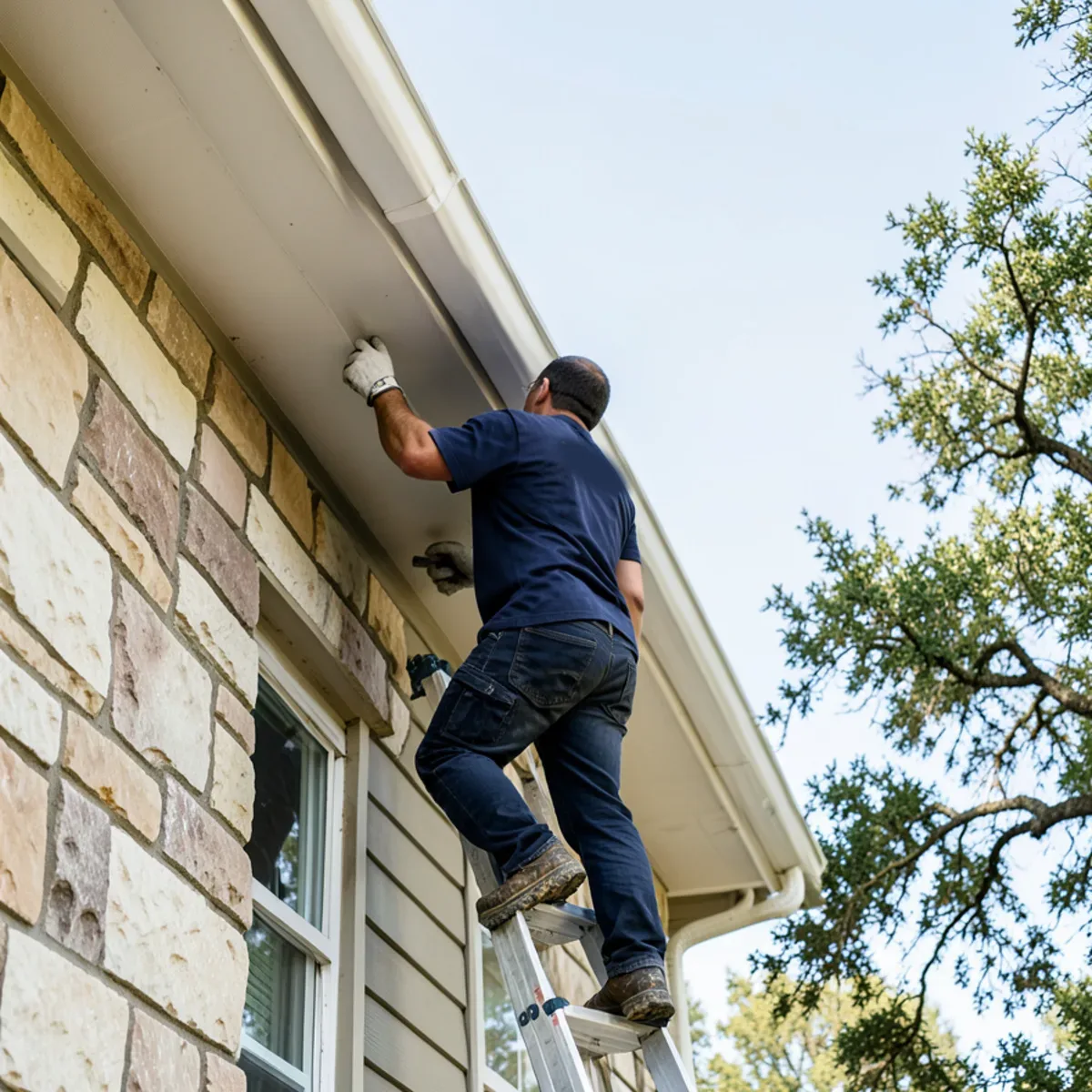

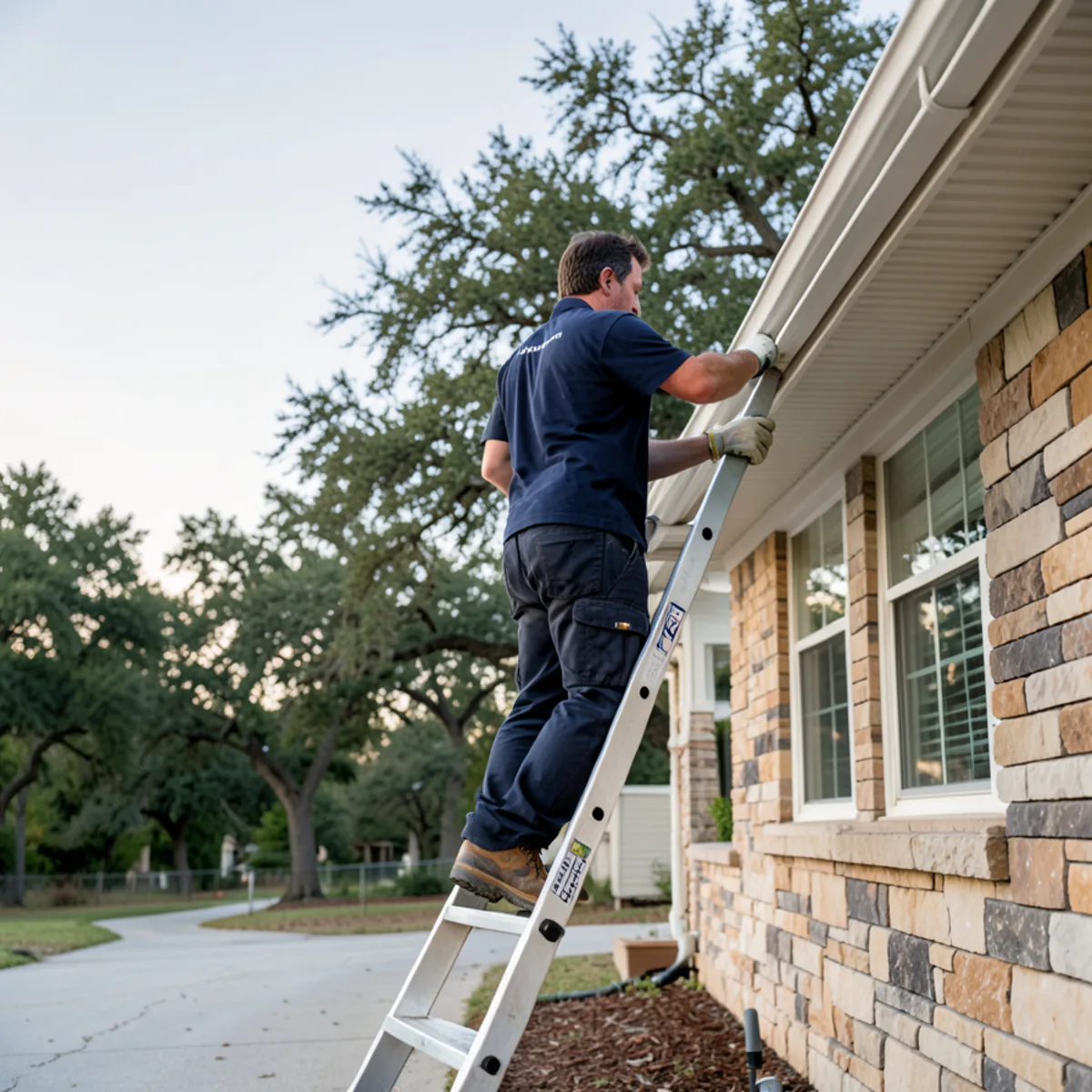
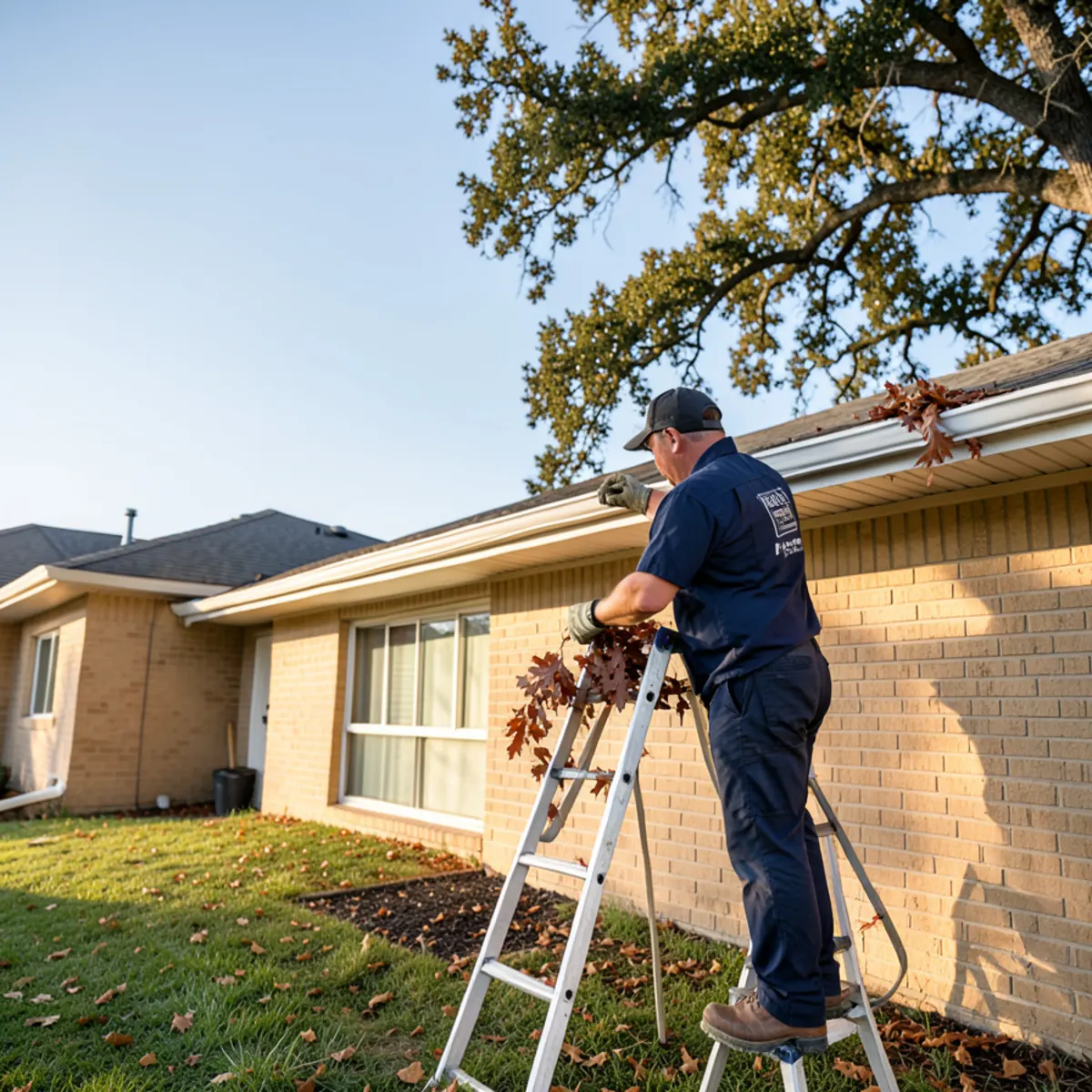

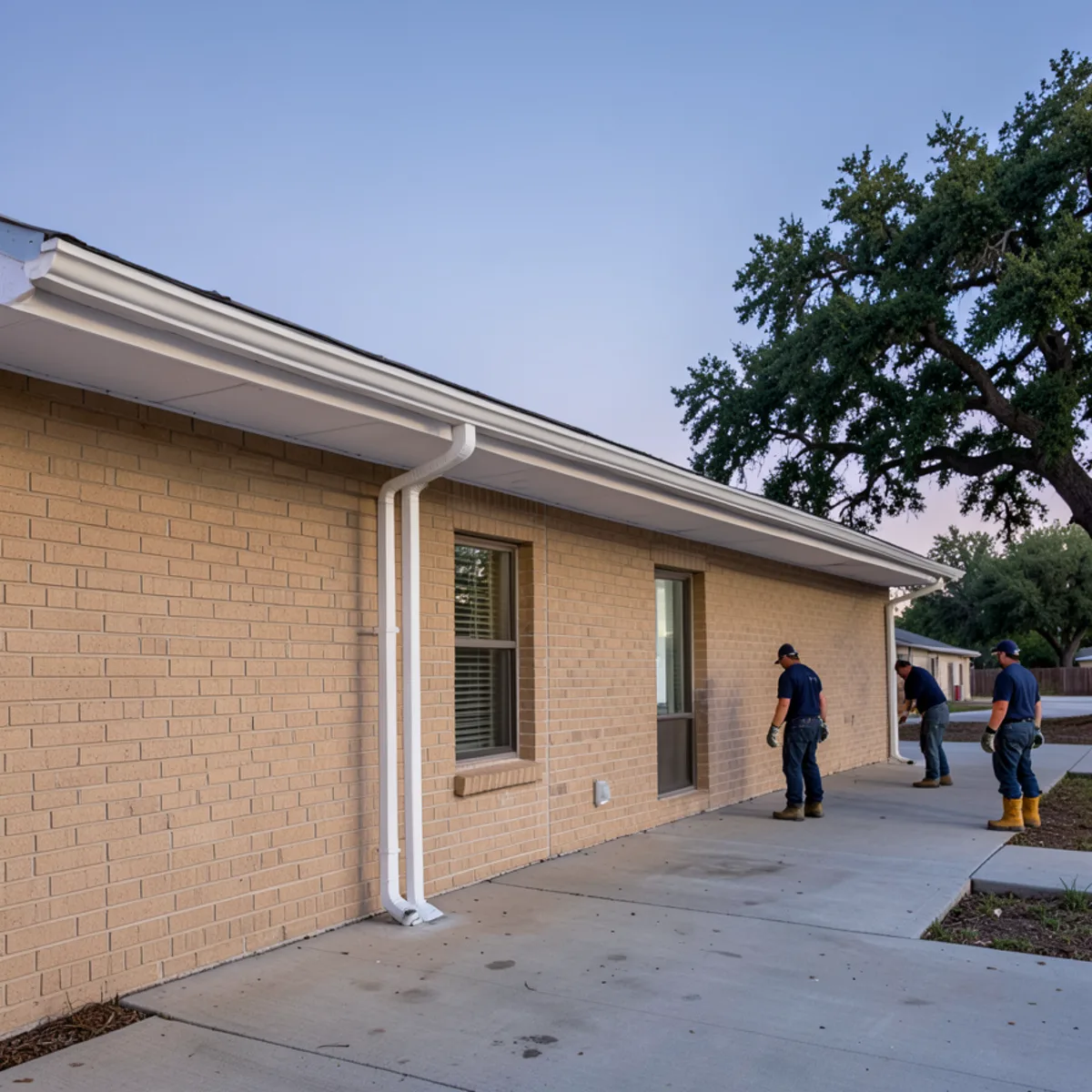
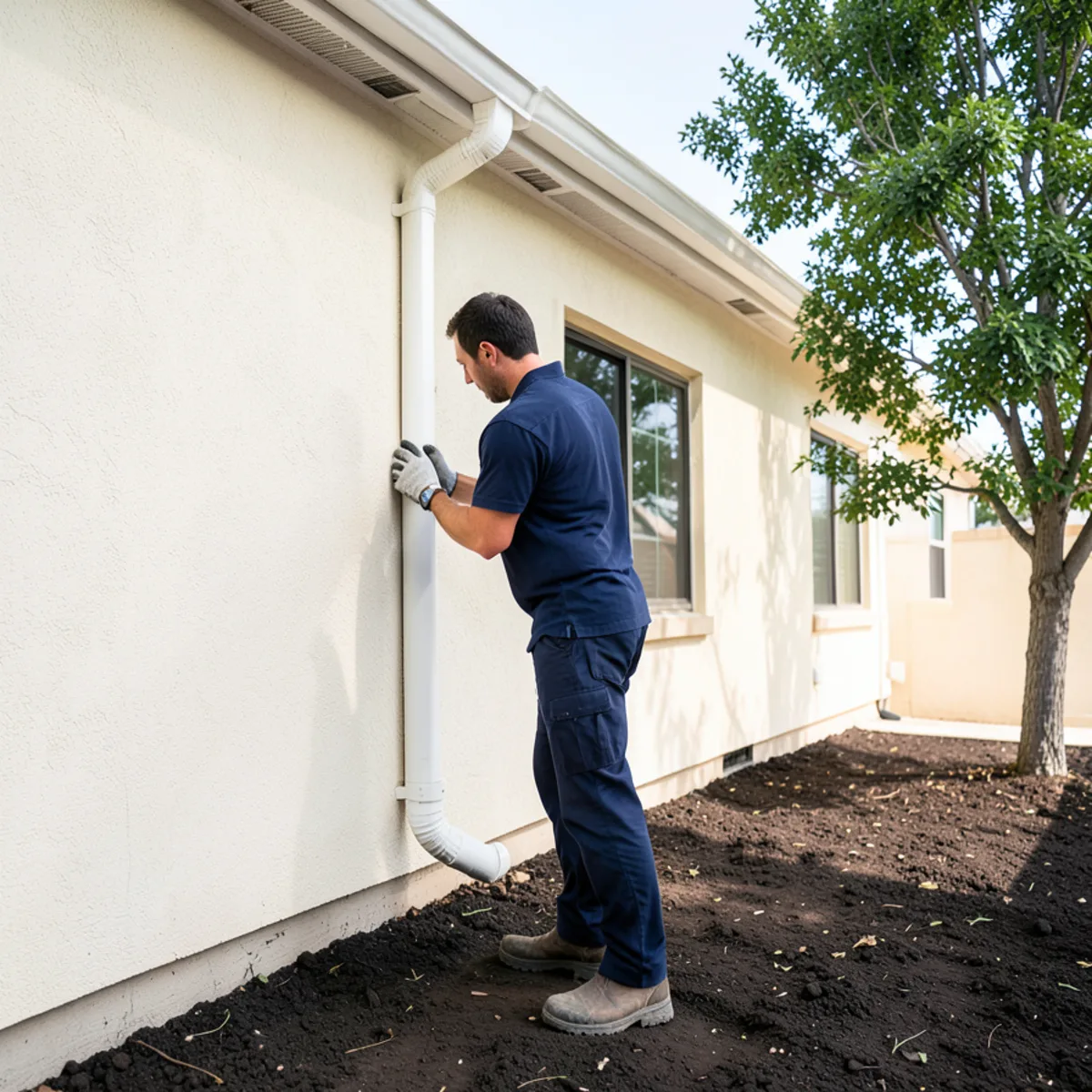
What are seamless gutters and how are they made on site?
Seamless gutters, also called continuous gutters, start as flat aluminum coil. A portable machine feeds the coil, shapes the profile and cuts each length in your driveway, so one run can match the wall it hangs on. Fewer joints means fewer places to leak. Sectional gutter comes in short factory lengths, and every joint depends on sealant.
The Austin area's median year built is about 2000, versus 1980 for the US (Census ACS 2020-2024), so many homes still wear their original builder-grade gutters. If yours is pulling off the fascia or holding water, do not wait for the next storm. Call about gutter repair first and talk replacement after. If a loose run is hanging overhead, keep people clear of it and call. For storm damage, go straight to emergency gutter repair in Austin.
V&V Seamless Gutters handles seamless gutter installation across Austin, Central Texas and the Texas Hill Country edge, from the first tape measure to the last downspout extension.

Seamless gutters in Austin: the four profiles compared
K-style is the flat-back profile with a decorative front, and it covers most homes here. The per-foot prices below describe installed aluminum generally, not any one profile, so have each option priced on the same quote.
| Profile | Typical use | Downspout | Austin fit |
|---|---|---|---|
| 5-inch K-style | Most standard homes | 2x3 or 3x4 | Standard roof area, light tree cover, no overflow history |
| 6-inch K-style | Large roofs, heavy tree cover | 3x4 | Roofs that overflow in rain bursts |
| Half-round | Architectural or decorative look | Confirm on the quote | Older or custom elevations where the shape matters |
| Box | Built-in or commercial-style runs | Confirm on the quote | Special cases; we confirm scope on the estimate |
Half-round gives a rounded, architectural line, and box gutters suit built-in or commercial-style runs. Both are special orders, so have them scoped and priced on the written quote. For the standard profiles, see gutter installation in Austin, TX.
Seamless vs sectional gutters: which suits Austin homes?
Seamless is the better choice for most Austin replacements, because fewer seams mean fewer leak points.
| Point | Seamless | Sectional |
|---|---|---|
| Seams | Only at corners and end caps | A joint every few feet |
| Length | Roll-formed on site to the wall | Short factory lengths joined on the wall |
| First leak points | Corners and end caps | Any joint, as the sealant ages |
| Best use | Whole-house install or replacement | A short patch on a matching system |
A drip at a seam or corner is the first failure to watch. Leaking gutter repair in Austin starts with resealing that joint or rehanging the corner, and it works when the damage stays in one section. Several weeping seams point to a new run.
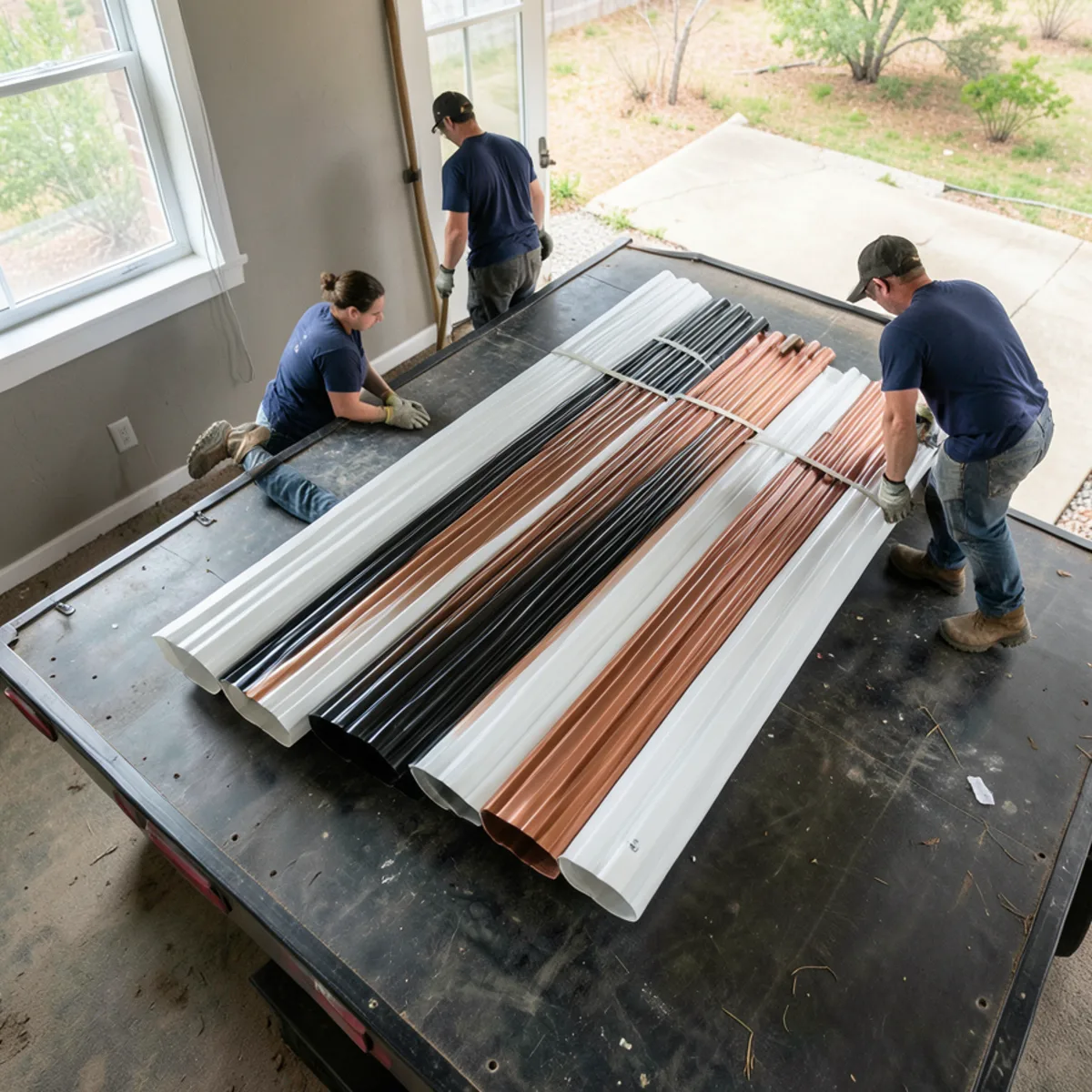
Seamless gutter color options
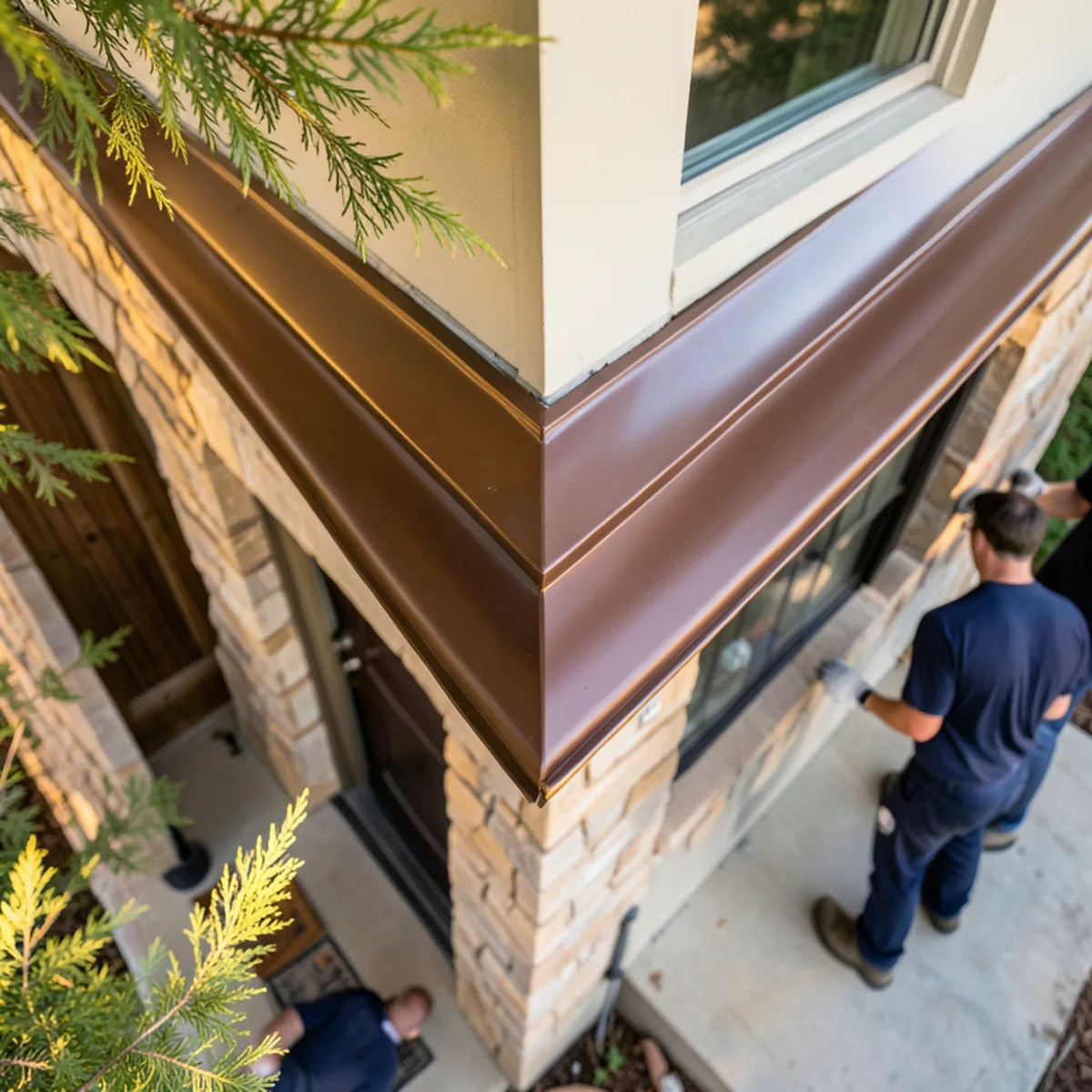
Color comes from the coil, so pick it at the estimate and put it on the line-item quote. A copper color is a coated finish, not true copper, so ask which one is being quoted.
How much do seamless gutters cost in Austin?
Plan on a four-figure job for a whole house, then get it measured. The published numbers disagree because each one measures something different:
- Angi, Austin seamless guide (2026): average job $1,128, typical range $883 to $1,373.
- Angi, per foot: $4 to $10 per linear foot on one page and $5 to $10 on another.
- A national gutter-cost listing for Austin: $7 to $15 per linear foot installed.
Do not average these. A job average says nothing about your length, and per-foot figures change with what is counted. Run the math on 150 linear feet: Angi's low page gives $600 to $1,500, the listing gives $1,050 to $2,250, and the $1,128 average sits inside both. These are third-party planning figures. Your own number comes from your measured house.
What changes the price of a seamless gutter job?
Six lines move a quote: linear feet with corners and end caps, gauge, gutter size, downspout count, guards, and any fascia repair behind the old run. Angi lists Austin gutter labor at about $75 per hour and guards at about $5 to $13 per linear foot. The cheapest bid is often the thinnest aluminum with the fewest downspouts, so compare at least three written quotes line by line.
Gutter cost planner
Planning range: $1,050 to $2,250
Uses the published $7 to $15 per linear foot range for Austin, not a V&V price. Your written estimate is what counts.
Quote comparison checklist for Austin bids
The seamless gutter cost per linear foot in Austin is only a starting point. Line up every bid in this table, and ask for any line a quote leaves blank before you compare totals.
| Quote line | What to look for | Watch for |
|---|---|---|
| Linear feet | Measured at your house, with corners and end caps counted | A lump sum with no footage |
| Gauge | .027 or heavier, written as a number | No gauge listed, or .025 and .019 stock |
| Size and profile | 5-inch or 6-inch K-style by name | "Standard gutters" with no size |
| Downspouts | Count and size, about one per 30 feet | No count on the page |
| Guards | Material named, and metal in a WUI zone | "Leaf guard" with no material |
| Fascia repair | Its own priced line | "As needed" with no rate |
| Warranty | Written terms for workmanship, material and labor | "Lifetime" with no document |
For more on seamless gutter installation cost in Austin, read our cost guide.
Which specs should your seamless gutter quote list?
Three specs decide how a run performs. If a quote skips them, ask.
- Gauge, the thickness of the aluminum. .027 inch is the common professional standard and the minimum V&V hangs. .032 is the heavier option. Big-box stock is often .025 or .019, and thin metal dents and sags between hangers.
- Slope. About 1/4 to 1/2 inch per 10 feet along the entire length. Too little leaves standing water, which sags the run and stains the fascia.
- Downspouts. About one per 30 feet of gutter rather than the common 40-foot spacing. A 2x3 opens 6 square inches and a 3x4 opens 12.
What aluminum gauge is best for seamless gutters, .027 or .032?
.027 aluminum is the floor for seamless aluminum gutters on an Austin home, and .032 is the upgrade. Thicker metal resists denting and sagging between hangers.
National contractor tables commonly list aluminum at 20 to 30 years, but that is not Austin data, and the .027 and .032 ranges overlap. Ask what the heavier gauge buys on your house before you pay for it.
How much slope should a seamless gutter have?
About 1/4 to 1/2 inch per 10 feet, set toward each downspout and checked along the whole run, not just at the first hanger. Standing water after the first rain shows where it went wrong.
How many downspouts does a seamless gutter system need?
Plan about one per 30 feet of gutter. The common 40-foot spacing gives water a longer trip, and burst rain punishes that. Downspout spacing and sizing work together, so check both before paying for a bigger gutter.
The parts a quote should name
Hangers tie the run to the fascia, and a loose one rattles in wind. Miter corners and end caps are the only seams, so ask how they are sealed. Elbows turn the downspout along the wall, and a downspout extension or splash block takes over at the ground.
Have a quote in hand? Call and we will walk you through gauge, slope and downspout count.
- 4.5★ from 36 Google reviews
- Free estimates
- Run by owner Victor and his son Omar
What burst rain and clay soil ask of a gutter
Why do gutters overflow in Austin when annual rainfall is modest?
Size for the burst, not the annual total. NOAA NCEI normals give Austin 36.3 inches a year across about 86 wet days, with May wettest at 5.13 inches. That looks modest. The City of Austin has recorded more than 5 inches in several hours, and that is when a builder-grade gutter pours over its edge and streaks the siding.
Undersized gutters with too few downspouts cannot move that volume. Downspout count is the first fix, so overflowing gutter repair in Austin starts with another outlet before a bigger gutter. Then the water has to land somewhere useful.
Here is what a losing gutter looks and sounds like:
- Water pouring over the gutter edge during a downpour
- Overflow streaks on the siding and fascia
- A rattling sound from loose gutter hangers
- Sagging sections holding standing water
- Dirt eroding and pooling by the foundation under a downspout
- A gurgling downspout that will not drain, which calls for downspout unclogging
Photograph overflow and erosion during a rain burst, then show the photos at your estimate, so the fix is sized to the real problem. Start with our quick checks for overflowing gutters.

How far should downspouts discharge from the foundation in Austin clay soil?
Carry roof water 6 to 10 feet from the foundation, never under 5 feet. Clay sheds water slowly, so short discharge pools at the slab and cuts the soil under the outlet. East of I-35, Blackland clay swells when wet and shrinks when dry, so roof water dumped beside a slab can move the foundation. USDA NRCS design guidance calls for at least 5 feet of downspout extension on expansive soils, and 2021 International Residential Code section R801.3 sets the same distance on those soils. A splash block alone does not reach 6 feet. For outlet moves and extensions, see downspout installation in Austin.

A downspout extension for clay soil is a rigid or flexible run above ground, or a buried line that exits in the yard. When an outlet dumps on a walkway or a low corner, downspout relocation moves it. Gutter drainage in Austin has one goal: roof water lands where the yard can carry it off. Read why blackland clay makes downspout placement so important.
What size gutter does an Austin home need?
Most standard Austin homes need 5-inch K-style with 2x3 downspouts. Move to 6-inch K-style with 3x4 downspouts for a large roof area, heavy tree debris or overflow in a rain burst. No published Austin formula sets the line, so this is installer judgment, and the tape measure settles it. Add downspouts before assuming the gutter is too small.
| Your house | Start with | Next check |
|---|---|---|
| Standard roof area, light tree cover, no overflow history | 5-inch K-style with 2x3 downspouts | Spacing near one per 30 feet |
| Overflow on one long run | Another downspout, or a 3x4 outlet | Whether water still tops the run in a burst |
| Large roof area, heavy tree debris or repeat overflow | 6-inch K-style with 3x4 downspouts | Guard choice and cleaning schedule |
Our guide to 5-inch vs 6-inch gutters covers when 6-inch seamless gutters are worth it on an Austin roof.
Which downspout size matches a 5-inch or 6-inch gutter?
The numbers give the opening in inches, width then depth, so a 3x4 carries more water. A 5-inch K-style gutter takes a 2x3 or a 3x4. A 6-inch K-style takes a 3x4.
The baseline is 1 square inch of downspout per 100 square feet of roof, so a 2x3 drains about 600 square feet and a 3x4 about 1,200. Read more on 5-inch K-style gutters.
Gutter sizing check
Starting point: 5-inch K-style with 2x3 downspouts, with at least 4 downspouts, placed about every 30 feet of gutter.
A rule of thumb based on one square inch of downspout per 100 square feet of roof. The on-site measure decides the final spec.
Austin WUI rules for gutters and guards
WUI stands for Wildland-Urban Interface, Austin's building rules for homes near wildland. The 2024 code covers new construction or development starting on or after July 10, 2025, inside Austin's full and limited purpose jurisdiction. It lists noncombustible gutters and downspouts with leaf guards in Zones A, B and C. Existing buildings generally need not update unless a code official finds a serious safety hazard, and a roof replacement of 50 percent or more triggers full replacement.
The City measures zones from wildland. Zone A is within 50 feet, Zone B is more than 50 and up to 150 feet, and Zone C reaches up to 1.5 miles from 750 or more acres of wildland, or up to 0.5 miles from 40 or more acres.
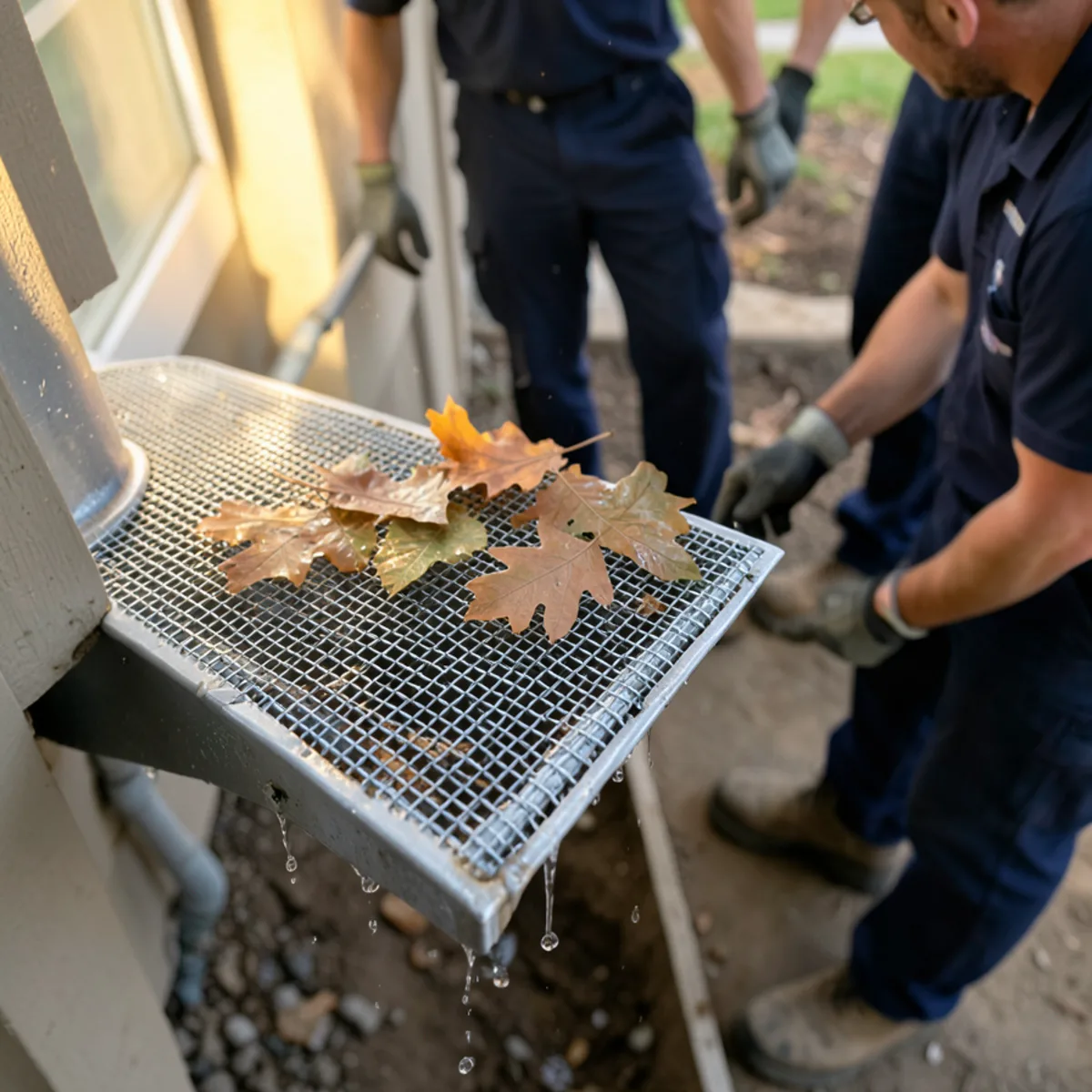
Aluminum handles the gutter half. The guard is where people go wrong. Vinyl guards typically do not qualify, and metal micro-mesh does, so get the guard material in writing. Check your address on the Interactive WUI Code Map or email wuicodeinfo@austintexas.gov. Outside Austin this rule does not apply, so check local rules. See gutter guards for options.
Noncombustible gutter guards in Austin: the WUI-ready check
Run these checks before you pay for WUI-compliant gutter guards in Austin, and hold any free-guard offer to the same list.
- Address. Look it up on the City's Interactive WUI Code Map.
- Gutters and downspouts. The City calls for non-combustible materials. Aluminum fits.
- Guard material. The City calls for leaf guards that are non-corrosive and non-combustible. Metal micro-mesh is the type to ask about.
- Vinyl or plastic. Vinyl guards typically do not qualify, so leave them off a WUI quote.
- Paperwork. Get the guard's material in writing before you pay.
Outside a WUI zone, see micro-mesh gutter guards for gutter guard installation in Austin, and our micro-mesh vs screen comparison.
Is a gutter company licensed in Texas?
Usually not, because there is nothing to hold. Texas has no statewide roofing contractor license, and no state gutter license was found. City of Austin contractor registration applies to work under a building or trade permit. So when a company says 'fully licensed and insured', ask what that means and ask for proof.
V&V makes no license or insurance claim on this site. Verify insurance and references with every company you call, ours included, and look up any BBB profile yourself.
Verify any gutter contractor in Austin the same way:
- Insurance. Ask for a current certificate and check the dates.
- Better Business Bureau. Look up the profile yourself.
- Registration. Ask about City of Austin contractor registration if the job needs a permit.
- References. Ask for recent local jobs you can see from the street.
- Warranty. Get the written terms before you sign.
Want a free gutter estimate in Austin? Call and we will measure the house and put every line in writing.
- 4.5★ from 36 Google reviews
- Free estimates
- Run by owner Victor and his son Omar
From free estimate to final walkthrough
- Free estimate. We measure linear feet, check the fascia and mark downspout locations.
- Written line-item quote. It lists gauge, size, color, downspout count and guards.
- Approve and schedule. No sales pressure.
- Install day. Old gutters come off, the new run is roll-formed on site and hung at the correct slope.
- Walkthrough. After cleanup, we check downspout discharge with you.
A seasonal care schedule for seamless gutters
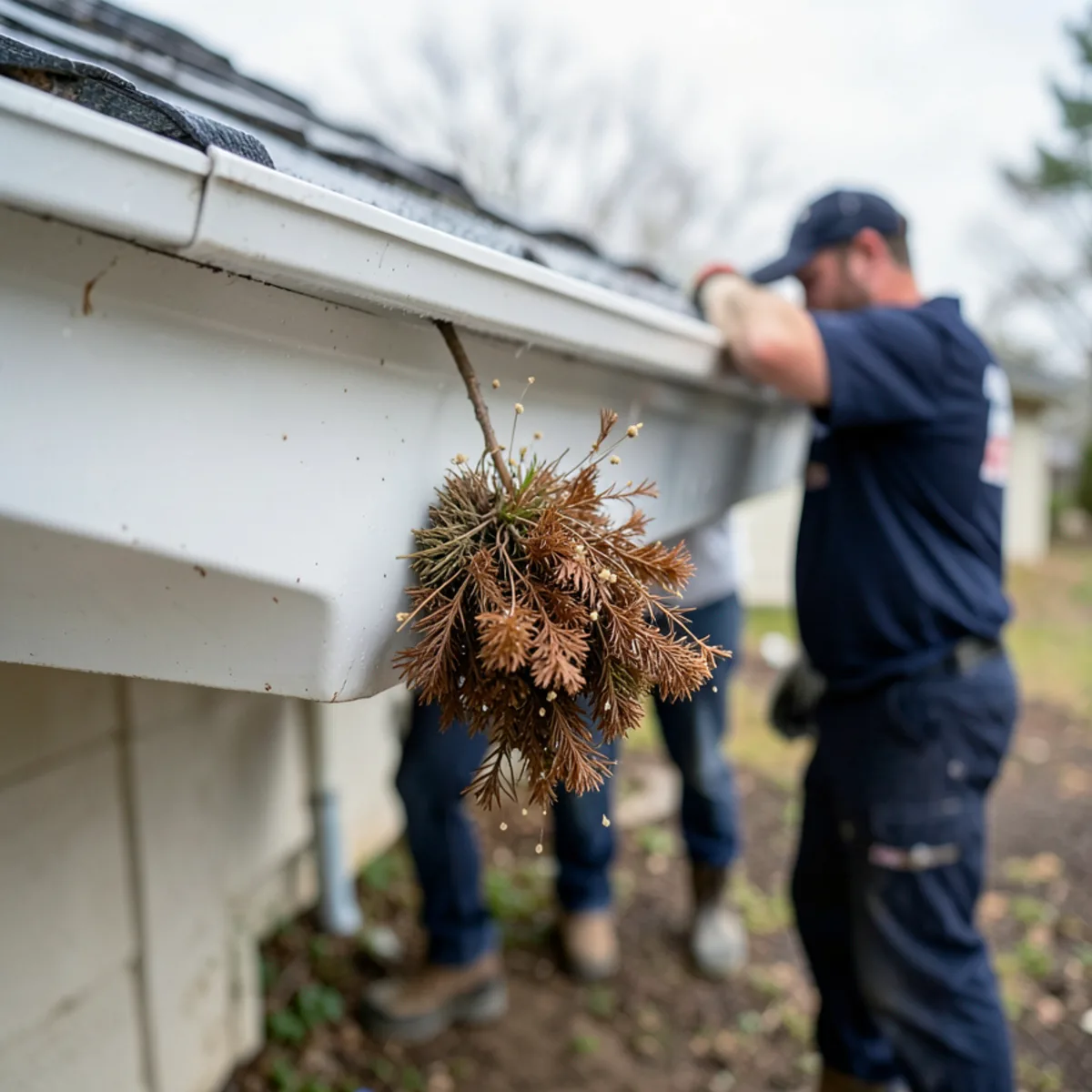
Live oaks drop tassels and pollen in thick mats right before the rainy season. Here is how the twice-a-year rule lands on an Austin calendar:
| When | What to do | Why |
|---|---|---|
| After spring live oak leaf drop | Clear the run and flush each downspout | Clears the run before May, the wettest month |
| After any major storm | Look for sagging and loose hangers | Storms loosen what dry months hide |
| Late fall | Clear leaves and check discharge at each extension | Water keeps moving through winter rain |
Prefer to hand it off? Our gutter cleaning service covers Austin.
Last updated November 1, 2026.