
Local angles
Do Austin Homes Really Need Gutters? A Straight Answer
By the V&V Seamless Gutters crew · Published and updated November 1, 2026

Do homes need gutters in Austin? Most do, and on expansive clay soil the residential code expects a controlled way to carry roof water away from the foundation. A few houses can get by with partial gutters or none, usually where deep overhangs meet a falling lot on rock. Your soil, eaves and grade decide it.
Do homes need gutters in Austin under the code?
Sometimes, yes. International Residential Code section R801.3 says that where expansive or collapsible soils are known to exist, dwellings need a controlled method of water disposal from roofs, discharging at least 5 feet from foundation walls or to an approved drainage system. That is the model language. The City of Austin lists the 2024 IRC as its current residential code with local amendments, effective July 10, 2025. Gutters are the common way to meet that requirement, though the code describes the result rather than requiring a product called a gutter.
Two limits apply. The clause turns on expansive soils being known to exist at the site, and not every Austin lot sits on that soil. Other cities also adopt their own codes. If you live in a place like Rollingwood, which is its own city, check with that building office rather than relying on Austin's. Ask Development Services or your local office how the rule applies to your property.
Not sure what your house needs? Call for a free estimate and we will walk the roofline with you.
- 4.5★ from 36 Google reviews
- Free estimates
- Run by owner Victor and his son Omar
Why Austin rain makes the case for them
Annual rainfall is not the reason. Austin's NOAA normal is 36.3 inches over about 86 wet days. Bursts are the reason. The City of Austin has recorded more than 5 inches in several hours, and NOAA Atlas 14 puts a 100-year, one-hour storm at City Hall near 4.8 inches. A 2,000-square-foot roof sheds roughly 6,200 gallons in a 5-inch rain, using the USGS figure of about 0.62 gallon per square foot per inch.
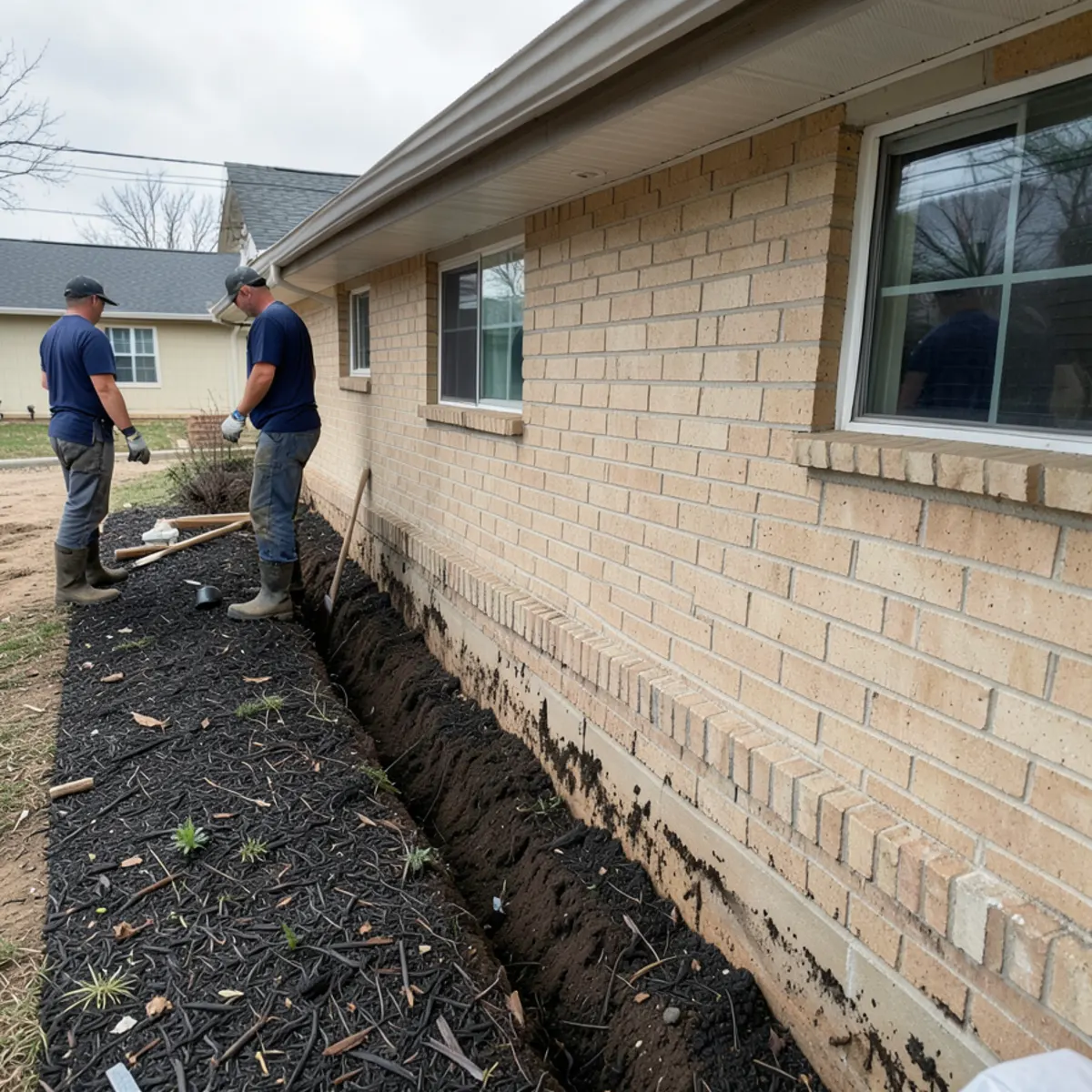
Without gutters, that water falls off the eave in a line. On a lot with deep soil it digs a trench under the drip line, splashes mud on the wall, and sheets across the entry. On clay, it soaks the ground right at the slab. Whatever the soil, all of that water lands within a few feet of your foundation.
When can you skip gutters, and when can't you?
Here is how we would sort it. This is a rule of thumb, not a code ruling.
Start with which side of the map you are on. Travis County splits along the Balcones Escarpment, with thin soil over limestone to the west and blackland clay to the east. That is why two homes a short drive apart can get different answers, and why copying the neighbors tells you little.
| Your house | Verdict | Why |
|---|---|---|
| Slab on clay, short eaves | Full gutters | Water lands near the slab, and the 5-foot clause likely applies |
| Slab on clay, deep overhangs | Full gutters | Overhangs help the walls, not the soil at the slab edge |
| Rock or shallow soil, lot falls away on all sides, 2-foot eaves | Possibly none | Water can leave on its own, so watch for splash and erosion |
| Lot falls away on most sides, flat by the entry | Partial gutters | Cover the entry, walks and any low side |
| Short modern eaves, tall walls | Full gutters | Almost no overhang means the wall takes the runoff |
| Roof valley dumping on a door or walkway | At least that section | A valley concentrates water from two roof planes |
Short eaves deserve a mention. Rebuilt homes with crisp modern roof lines often have little overhang, so the wall sits right under the runoff. Nothing shields the siding, windows or the ground at the slab edge. That is a clearer case for gutters than an older ranch with wide eaves.
What happens if you go without?
- Erosion at the drip line. Falling water cuts a trench and can wash out beds and mulch.
- Splash-back. Soil and water hit the lower wall, staining brick and wetting trim.
- Wet entries. Doors, walks and steps collect sheets of water, which is unpleasant and slippery.
- Soil moisture swings at the slab. On clay, repeat soaking beside the foundation is what you are trying to prevent.
- Fascia and soffit wear. Water wrapping around the roof edge keeps wood damp.
None of that is certain on any one house. West Virginia University Extension does tie clogged gutters to damage around windows, doors and foundations, which shows how much these spots depend on water being carried away.
The partial-gutter trap, and other Austin habits
As a general pattern, the homes that skipped gutters and regret it have clay, short eaves or a walkway that floods. Another common sight is the partial gutter: a short run over the front door, installed by a builder, with the rest of the house bare. That setup can be fine. Often, though, the single downspout dumps beside the slab, so it collects water from a large roof section and puts it in the worst spot on the lot.
We also see owners who want gutters mainly for rainwater. That works. We have redirected gutters to rain barrels for customers, and a roof gives you plenty to collect. Plan the overflow with the same care, because a full barrel sends water back to the foundation.
The honest case against gutters
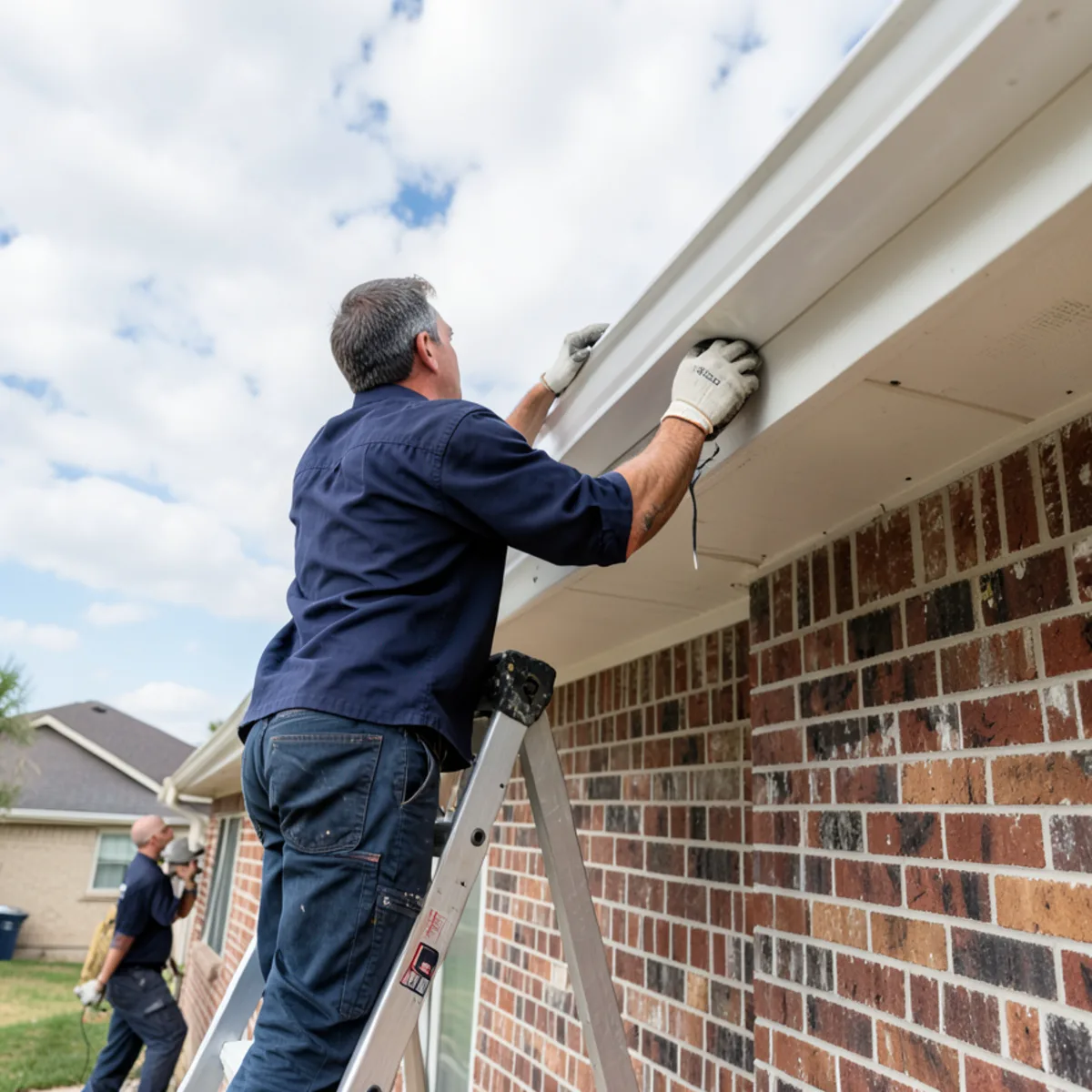
Gutters have downsides, and they belong in this decision. They need cleaning, at least twice a year by West Virginia University Extension's baseline, so a run nobody touches under a big oak can overflow against the fascia. They add a line to a clean modern eave, though color choice hides most of it. One customer wrote, "You can't even tell our home has gutters unless you look closely." And they cost money. Angi's 2026 Austin guide lists an average job of $1,128 and a typical range of $883 to $1,373. That is a third-party figure, so get your own written quote.
Set that against what the water does without them on your lot. If nothing is trenching, staining or pooling after a hard rain, waiting costs you little. If water reaches the slab or a door, fix that side first and leave the rest for later.
What should you do next?
- Look up your soil on NRCS Web Soil Survey, or ask your local building office.
- During a hard rain, note where water hits the ground and where it goes after that.
- Look at your eaves. Short ones give the wall little cover.
- Decide between full and partial coverage, then plan the outlets 6 to 10 feet from the foundation.
- Get a written quote listing gauge, size, color and downspout count.
For a house with none, gutter installation starts with measuring linear feet, checking the fascia and marking downspout locations. If you have gutters and they are the ones overflowing, downspout installation may solve more than new gutters would, since extra outlets are often the real need. Where neighbors' oaks are a worry, ask about micro-mesh gutter guards. They cut cleaning. They do not end it.
The straight answer
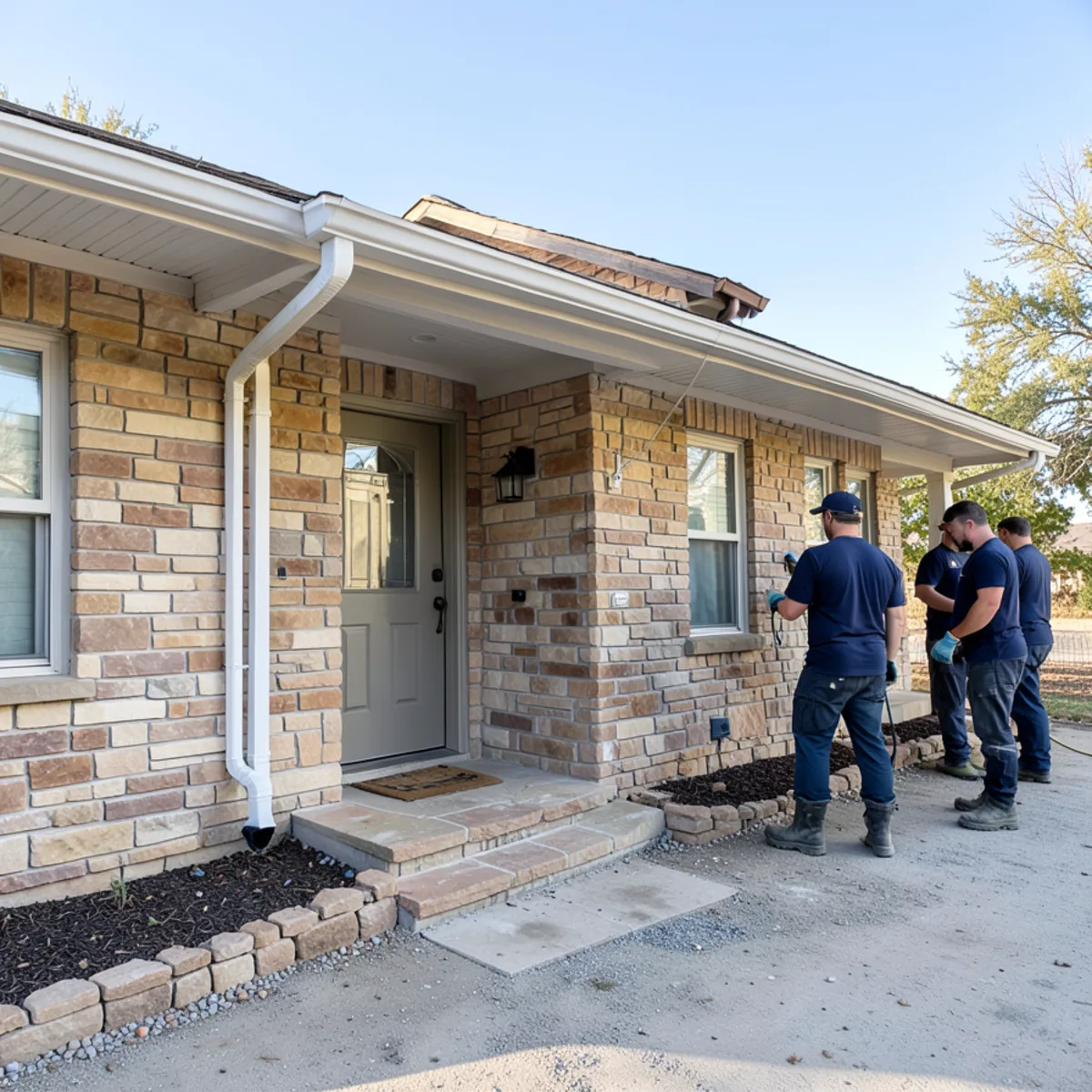
On clay, or with short eaves, plan on gutters. On rock with a falling lot and deep eaves, you may have a choice. In every case, the gutter is only half the job. What protects the house is where the water ends up. Still unsure? Call us. We will walk the roofline, mark where outlets would land, and put full and partial options on one written quote.
Sources
- International Residential Code 2021, Chapter 8, section R801.3 (Texas viewer)
- City of Austin, Building Technical Codes
- NOAA NCEI, U.S. Climate Normals 1991-2020
- NOAA Atlas 14 Precipitation Frequency Data Server
- USGS Water Science School, how much water falls during a storm
- West Virginia University Extension, Home Safety
- USDA NRCS Web Soil Survey
- Angi, seamless gutter costs in Austin (2026)
- Texas A&M AgriLife Extension, Travis County: The Real Dirt on Austin Area Soils
- Handbook of Texas (TSHA), Travis County
Common questions
Are gutters legally required on houses in Austin?
Yes, in effect, on some lots. IRC R801.3 calls for controlled roof drainage discharging at least 5 feet from foundation walls where expansive soils are known to exist, and Austin uses the 2024 IRC with local amendments. It describes the result rather than a product, so confirm how it applies to your property with Austin Development Services.
Do homes with deep roof overhangs still need gutters?
Yes, often, on clay. On rock, sometimes not. A two-foot overhang keeps rain off the wall, but the water still lands near the slab edge. If the lot falls away and the soil does not shrink and swell, you may be fine. Watch the drip line in hard rain and look for trenching or standing water.
Can I put gutters on only part of my house?
Yes. Partial gutters over doors, walks and low sides can make sense where the rest of the lot sheds water well. The catch is that a short run collects from a whole roof section, so its downspout needs a real discharge plan. Carry that water 6 to 10 feet out instead of dropping it at the corner.
Can gutters do more harm than having none?
Yes, if they stay clogged or dump beside the slab. A packed gutter spills against the fascia, and a short downspout gathers a roof section into one wet spot at the foundation. Keep them clean, carry each outlet 6 to 10 feet out, and on Blackland clay check that the ground falls away from the house.
About the author
Written by the crew at V&V Seamless Gutters, the Austin gutter company run by owner Victor and his son Omar. Read more about us or see what customers say.
Related service: gutter installation in Austin. We also work in Rollingwood.
Have a gutter question this article did not answer?
- 4.5★ from 36 Google reviews
- Free estimates
- Run by owner Victor and his son Omar