
Prevention checklists
Pre-Storm Gutter Inspection Checklist
By the V&V Seamless Gutters crew · Published and updated November 1, 2026
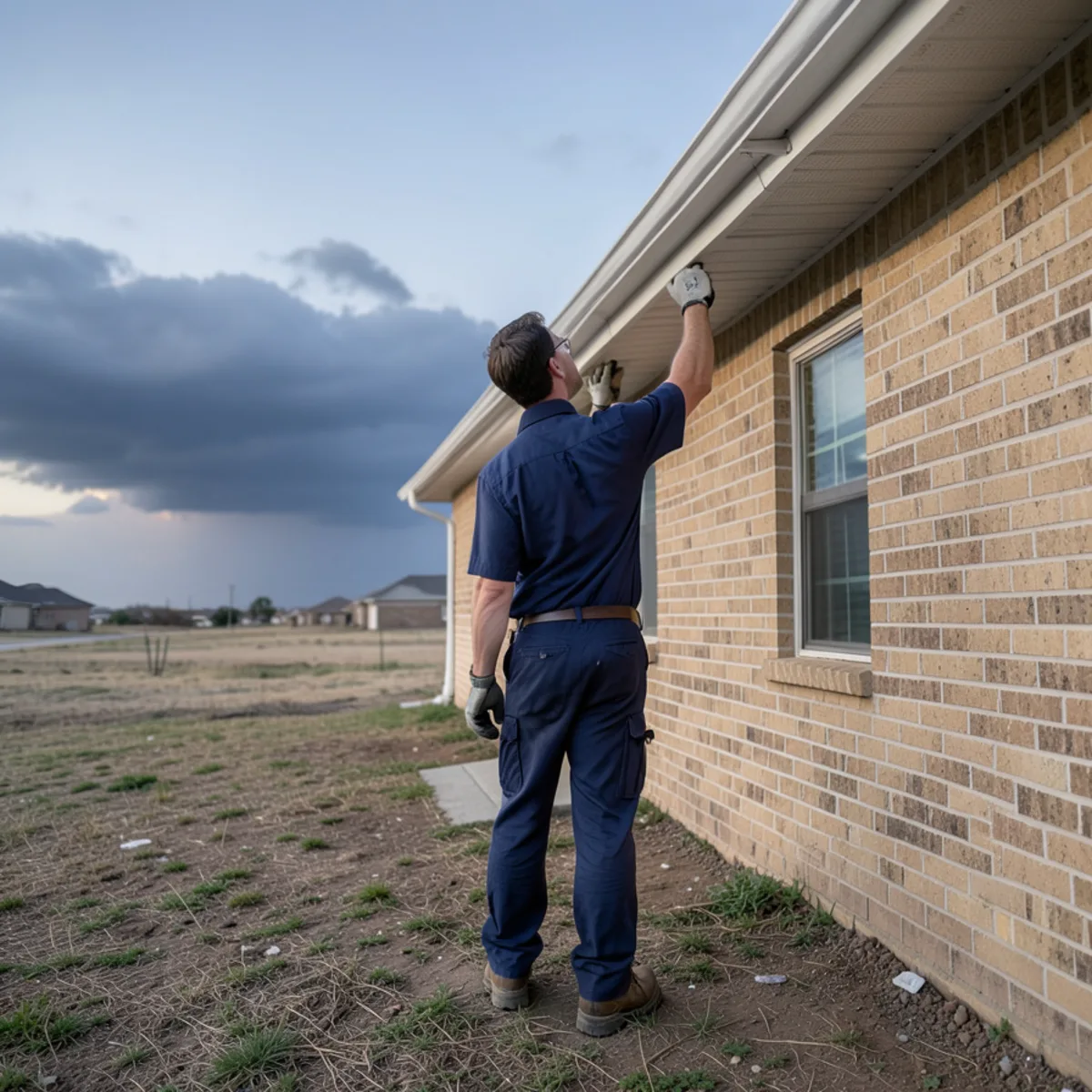
Run this gutter inspection checklist a few days before storms are due, not as the clouds build. Walk the house from the ground, flush each downspout with a hose, tighten or note anything loose and make sure water leaves at least 6 feet from the foundation. Do it early, because a ladder has no place in a storm.
Gutter inspection checklist: the ground walk
Start at one corner and circle the house with a notepad or your phone. Bursts of more than 5 inches in several hours are on record in Austin, according to the City of Austin, and that kind of rain is what overflows gutters, not the annual total. So the question for this walk is simple: can the system move a lot of water quickly right now?
- Look along each run. A straight line should run from end to end. Dips and bows mean loose hangers or a soft fascia.
- Check the corners and end caps. Rust trails or old drip marks show past leaks.
- Look for gaps. Daylight between the gutter and the fascia means the run is pulling away.
- Check downspout straps. A loose downspout can swing in the wind and pull at its joint.
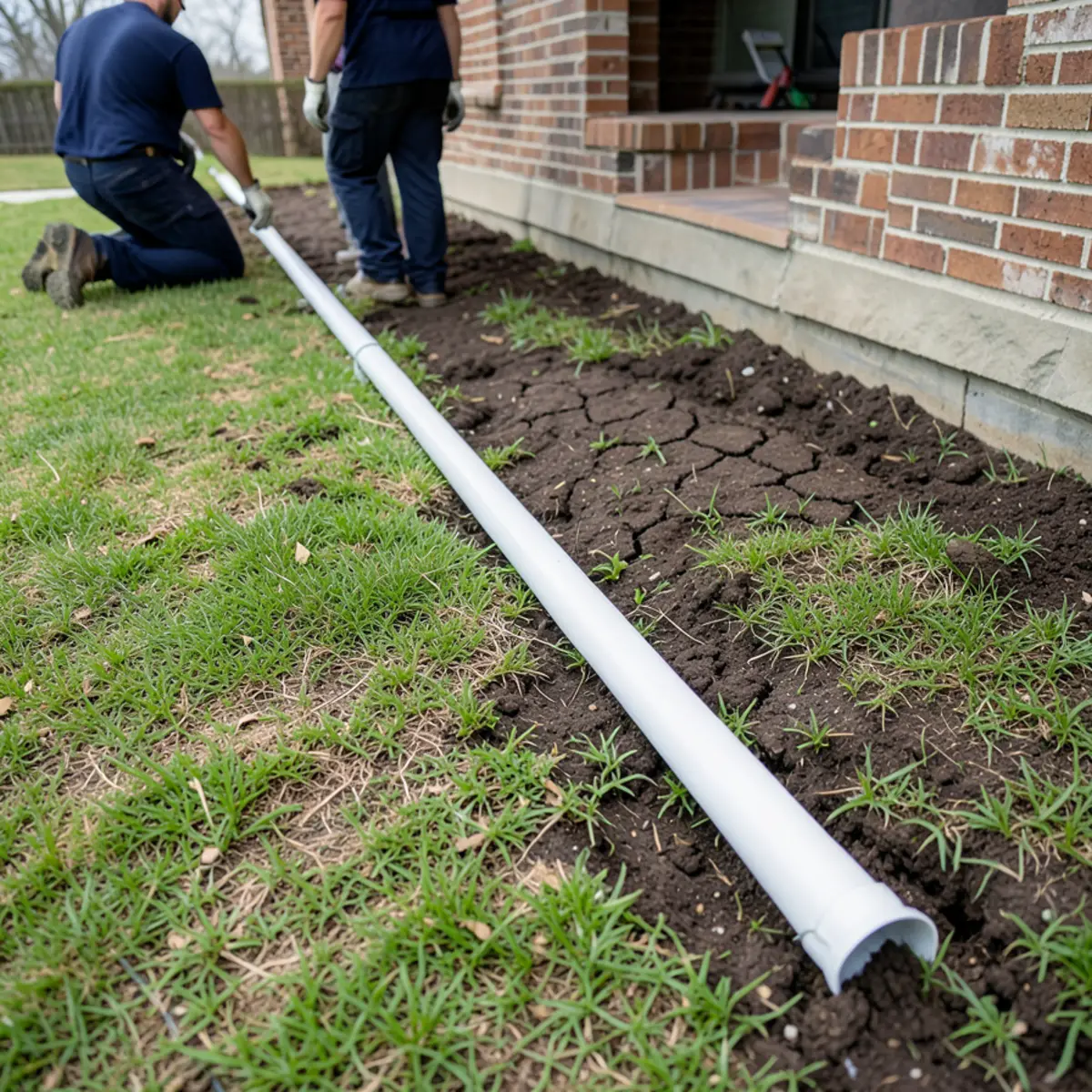
- Trace every downspout to the ground. Each one should end in an extension or pad, not at the slab.
- Look up at the trees. Dead limbs over the roof can take a gutter down with them.
- Check the soil. Washed-out spots and pooling marks along the foundation show where water has been landing.
Found something on your walk? Call (208) 464-4195, describe it, and we will tell you honestly when a crew can get there.
- 4.5★ from 36 Google reviews
- Free estimates
- Run by owner Victor and his son Omar
How do you test gutters before the rain comes?
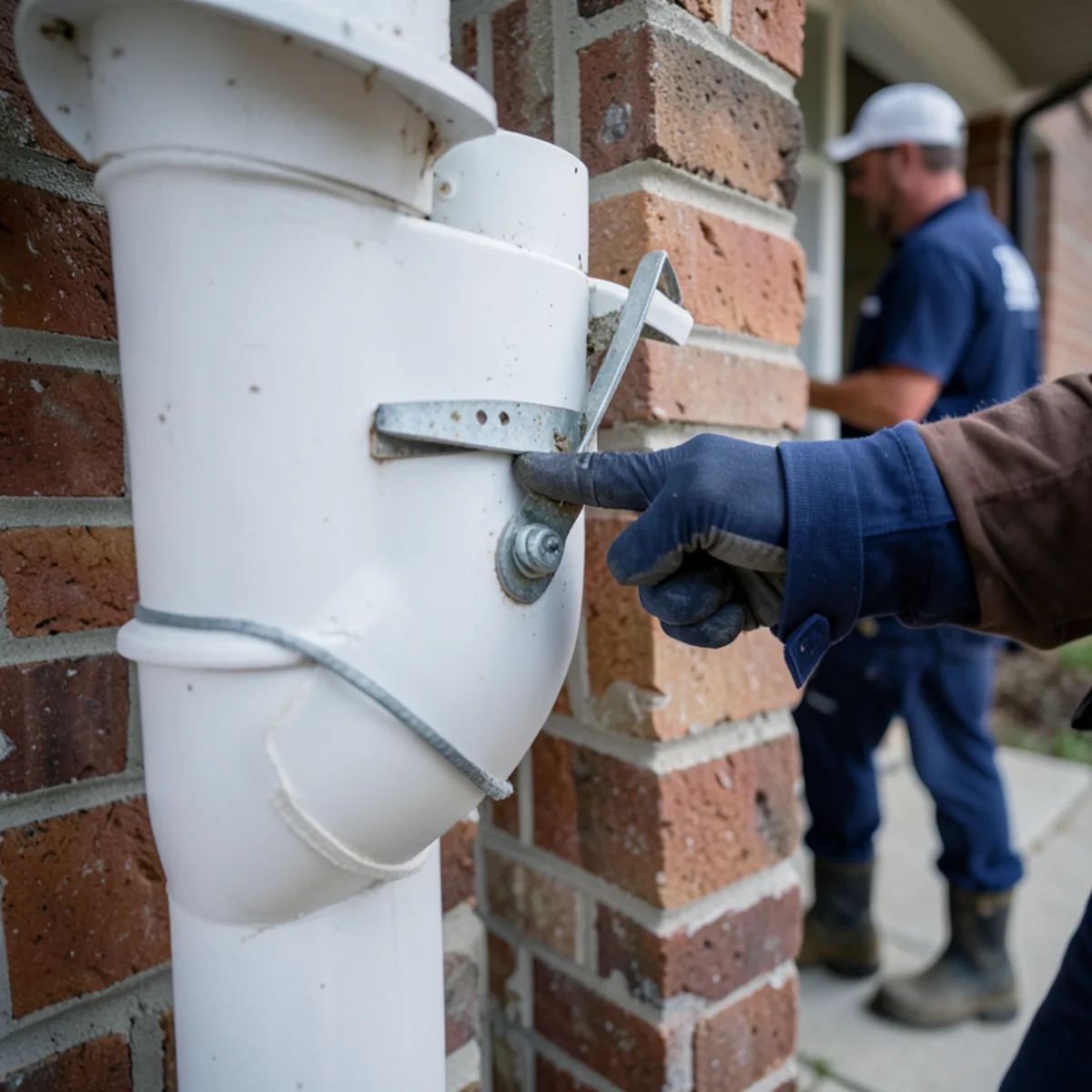
A hose is the best diagnostic tool you own. On a dry day, put water in at the high end of each run and watch what happens. Have a helper stand at the downspout outlet.
- Water should run steadily toward the downspout and not sit in the trough. Slope should be about 1/4 to 1/2 inch per 10 feet along the entire length.
- A strong stream should come out at the bottom within a short time. A weak trickle points to a partial clog.
- Water backing up at the top of the downspout means a clog in the elbow or the leg. Downspout unclogging deals with that.
- Drips at a corner or end cap are worth marking now, since they will be worse in a downpour.
If you cannot reach the high end safely, use a hose wand from the ground or leave this step to someone who can. OSHA's ladder safety card says to set the ladder on stable, level ground and keep three points of contact. Wet ground and wind fail that test, so dry and calm is the time to do this.

Why does discharge matter so much on clay?
Getting water off the roof is only half the job. On expansive clay, where it lands matters more. In Del Valle and other fast-growing areas southeast of Austin, clay soil swells when wet and shrinks when dry, so a downspout that dumps at the slab keeps one part of the soil wetter than the rest. USDA NRCS design guidance calls for at least 5 feet of downspout extension on expansive soils. Our working target is 6 to 10 feet from the foundation, never under 5.
| What you find | What it means | What to do |
|---|---|---|
| Elbow ending at the slab | Water lands against the foundation | Add an extension |
| Splash block only | It does not reach 6 feet | Add a longer extension or a pad at the end |
| Extension kicked aside | Water returns to the wall | Reattach it and move anything in the way |
| Extension running uphill | Water backs up inside | Reroute it so it falls away from the house |
| Erosion at the outlet | Flow is cutting the soil | Add a concrete splash pad |
If a side of the house has too few outlets, the fix may be an extra downspout rather than a bigger gutter. About one per 30 feet of gutter is a sound target. Downspout installation is often the cheapest storm upgrade a house can get.
Check the rain barrel overflow too
A rain barrel fills early in a burst. After that, every gallon goes wherever the overflow points. Follow that hose or spout on your walk and aim it away from the slab, the same as any other outlet. A barrel that is full and spilling at the wall is a short elbow with extra steps.
Which findings can wait?
A walk usually turns up more than you can fix in a week, so sort the list. Anything that could fall on a person comes first. Anything that stops water leaving comes second. Leaks come last, because a dripping corner still drains.
| Finding | When to act | Why |
|---|---|---|
| Run hanging free over a door or walkway | Now: keep people clear and call | Wind can bring it down |
| Clogged downspout or elbow | Before the rain | Everything above it overflows |
| Extension off or aimed at the slab | Today, by hand | It takes minutes and no ladder |
| One loose hanger on a straight run | This month | Wet weight can spread the sag |
| Drip at a corner or end cap | After the storm is fine | Water still reaches the downspout |
| Dent that still drains | Can wait | Cosmetic unless water stands in it |
What should you do once a storm is on the way?
Stop the inspection. Once a storm is close, everything left waits. The National Weather Service says there is no safe place outside when thunderstorms are in the area, and being on a metal ladder at the eave is about the worst spot to be. Use the last dry hours for ground jobs only.
- Move patio furniture, grills and bins away from downspout outlets.
- Reattach any loose downspout extensions.
- Clear leaves away from yard drains so water can leave.
- Take dated photos of the gutters on each side of the house.
Those photos are worth the five minutes. If a storm does damage, a before picture makes it easy to show what changed.
The weak spots a storm finds first
Storm calls in this trade tend to share a few causes, and all of them can be seen on a dry day.
- A gutter that fell in a storm usually had loose hangers or soft fascia well before the wind arrived.
- Debris adds weight. A run full of wet leaves puts far more load on its fasteners.
- Limbs do more damage than wind alone.
- Most overflow complaints are clogged downspouts, not gutters that are too small.
Tightening has limits. A longer screw into soft fascia holds until the first full load, and it hides the problem from the next person who looks. If the wood gives under a screwdriver, stop and have the board checked. Rushed sealant has the same problem, because it needs a clean, dry joint to bond. So spend the last dry weekend on flow: clear elbows, reattach extensions and empty the trough. Less water and less wet debris sitting in the gutter means less load on every hanger, which does more before a storm than a fresh bead of caulk.
After the storm passes
Walk the same route again once it is safe. Look for bent sections, pulled hangers and dents along the front face. If you plan an insurance claim, take photos first and call your insurer. Texas law bars a contractor from offering to waive or absorb your deductible, and from acting as a public adjuster on a property it is working on, according to the Texas Department of Insurance. V&V can document damage and quote the repair. It does not negotiate claims. For anything bent, loose or leaking, start with gutter repair, or look at storm and hail gutter repair if hail or wind did it.
Do it while it is dry
The whole check takes about as long as a lawn mow, and it fits best in early spring, before May's rain, and again in early fall. Note what you find, fix the small things and book the rest before the forecast turns. After a big storm the schedule fills up, so call while the weather is calm. Tell us what your walk turned up, and we will say what can wait and put the fix in a written quote.
Sources
Common questions
How long before storm season should gutters be inspected?
Give yourself a few weeks. May is Austin's wettest month on the NOAA normals, so aim for April, which leaves time to book a repair if you find one. Then repeat the check in early fall. A last-minute look still helps, but ground checks are all you should attempt once a storm is forecast.
Can a loose gutter wait until after the storm?
It depends on what is loose. A short section with one failed hanger usually can wait. A run hanging free over a walkway or a door should not, because wind can bring it down. Keep people clear of it, stay off the ladder in bad weather and call for a repair as soon as conditions allow.
Is a storm check different on a Del Valle clay lot?
Yes, mostly at ground level. USDA soil maps show Tinn and Heiden clays around Del Valle, and both swell hard when wet. Flat lots also need each extension to keep falling, or water sits at the far end. Walk every outlet during your hose test, and keep roof water out of low spots that already hold rain.
Should I pay someone to check my gutters before storm season?
Yes, if you cannot see the whole system safely. Two-story eaves and steep lots hide loose hangers and soft fascia. A cleaning visit already puts someone at the eave, so book it for April, ahead of May's rain, and ask them to check hangers, corners and the board behind the gutter while they are up there.
About the author
Written by the crew at V&V Seamless Gutters, the Austin gutter company run by owner Victor and his son Omar. Read more about us or see what customers say.
Related service: gutter repair in Austin. We also work in Del Valle.
Have a gutter question this article did not answer?
- 4.5★ from 36 Google reviews
- Free estimates
- Run by owner Victor and his son Omar