
Problem solving
Why Gutters Pull Away From the House
By the V&V Seamless Gutters crew · Published and updated November 1, 2026
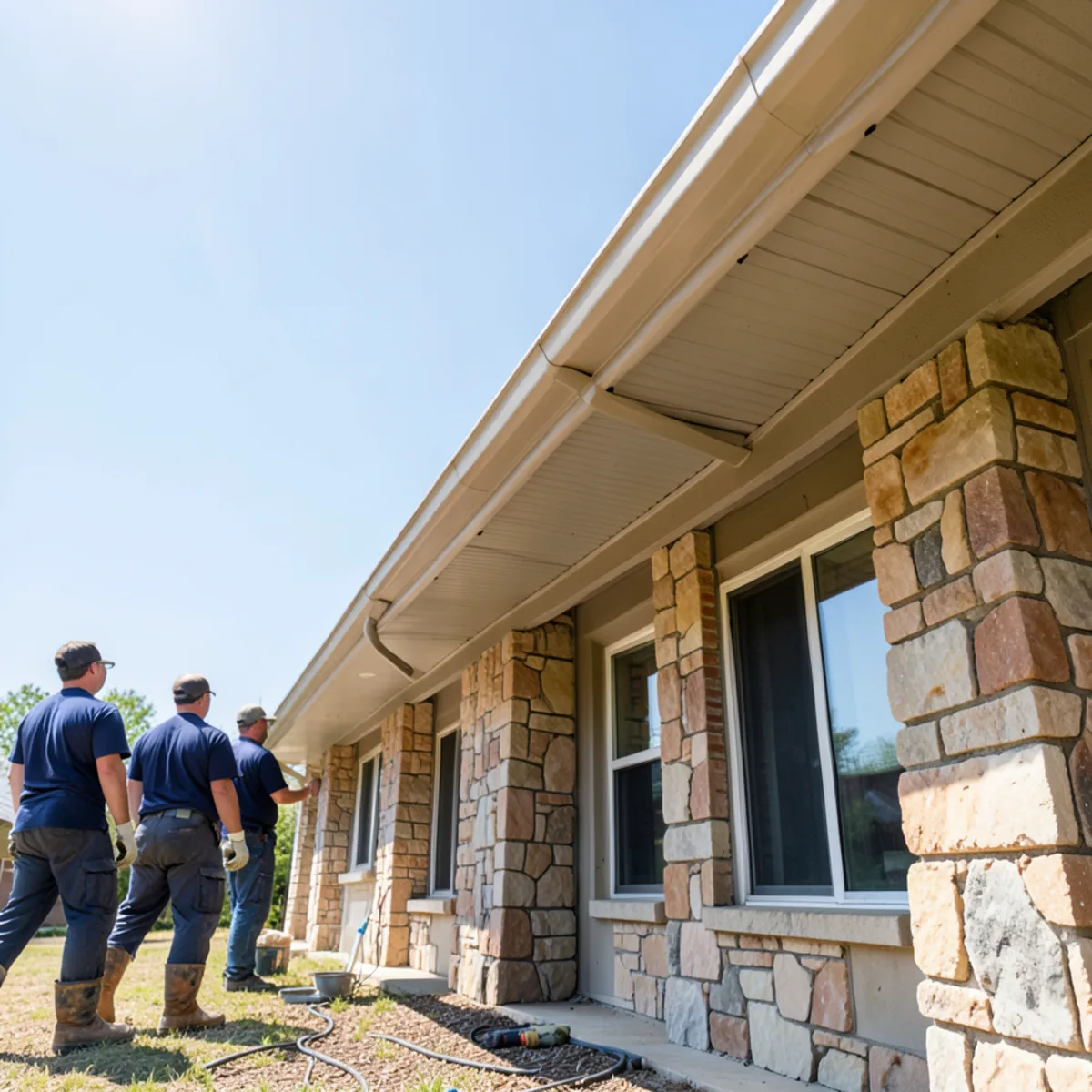
Gutters pulling away from the house means one of three things has failed: the fastener, the wood it grips, or the load it carries. Loose spikes are the simple case. Soft fascia is the serious one, because new hardware will not hold in rotten wood. Check the board first, then rehang the run with the right slope.
Why do gutters pull away in the first place?
A gutter hangs on a thin strip of hardware, and it carries more than most people think. Here is the math. A roofing contractor study guide puts a full 5-inch K-style gutter at about 0.8 gallon per foot. Water weighs about 8.34 pounds per gallon. So a 30-foot run filled to the top holds roughly 24 gallons and about 200 pounds, before you count wet leaves.
With hangers about 24 inches on center, the common spacing that guide gives, that is 15 hangers sharing the load, or around 13 pounds each. That is manageable when the hardware is sound and the load is spread evenly. It stops being manageable when a few hangers have let go, because the load moves to their neighbors, and they go next. That chain is why a small gap can turn into a long sag. Lose three hangers in a row on that full run and the two on either side carry about 33 pounds each, two and a half times their share.
Gutter starting to tip away from the roofline? Call for a free estimate before the fascia takes the damage.
- 4.5★ from 36 Google reviews
- Free estimates
- Run by owner Victor and his son Omar
Gutters pulling away from the house: the causes, in order
Work through these in order. The first one you confirm is usually the real answer, or a big part of it.
| Cause | What you notice | What to do |
|---|---|---|
| Old spike-and-ferrule hardware | Nail heads backed out of the gutter face | Replace with hidden hangers and screws |
| Soft or rotted fascia | Hardware spins, wood feels spongy | Repair the wood before rehanging |
| Clogs and standing water | Sag at one spot, leaves in the trough | Clean, then check the slope |
| Too few hangers | Long waves between fasteners | Add hangers, tighter near corners and outlets |
| Ladder or impact damage | One local dent or bend | Rehang or replace that section |
| Storm load | Long section pulled down on one side | Check hardware and fascia along the whole run |
| Thin metal | Run flexes when pressed lightly | Consider replacing with heavier stock |
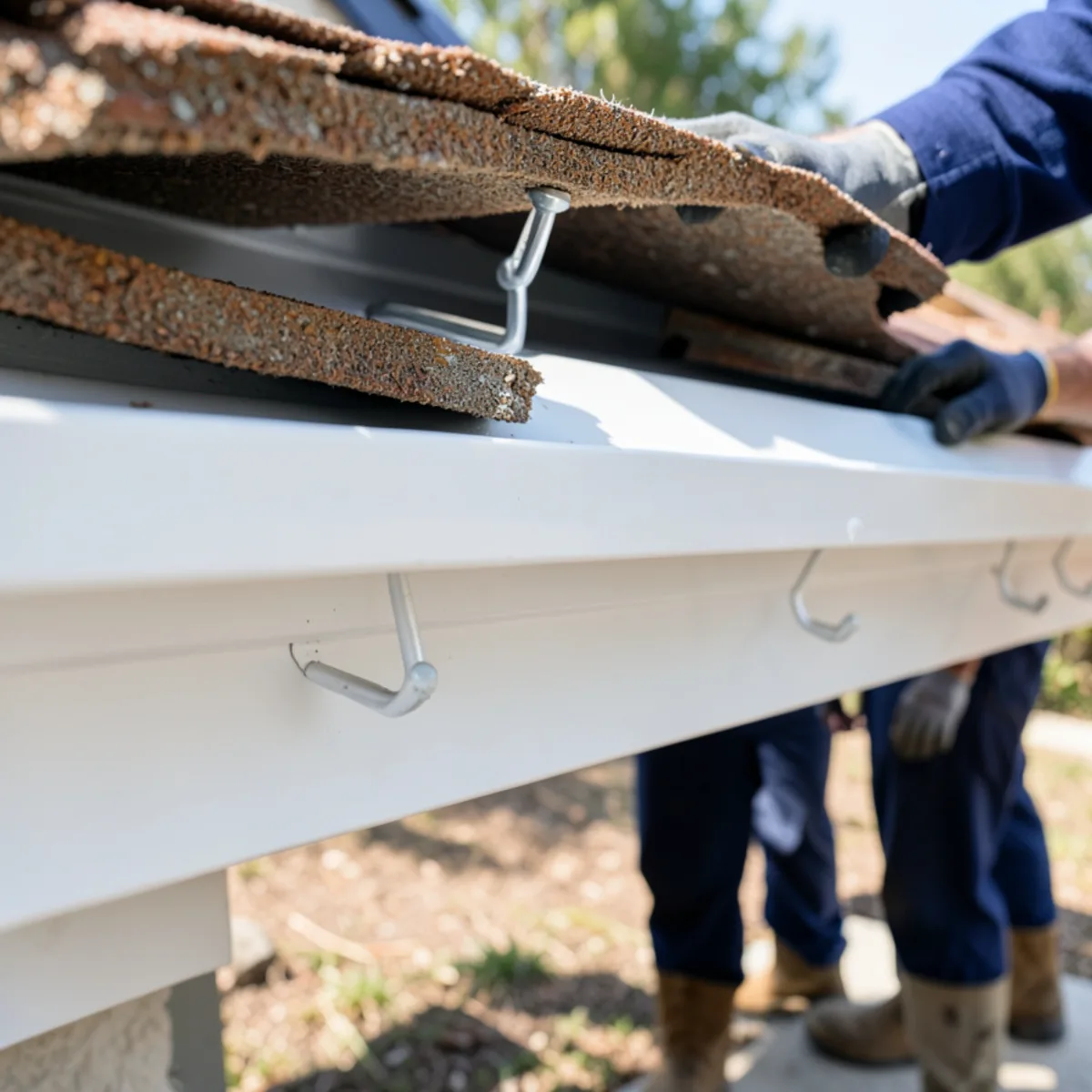
Spikes deserve a note because so many older gutters use them. A spike is a long nail driven through the gutter and a metal sleeve, called a ferrule, into the fascia. Heat and cold work on that nail for years, the wood hole gets wider, and the spike walks out. Pushing it back in rarely holds, because the hole is already too large. A screw-in hidden hanger sits inside the gutter and grips fresh wood.
How do you tell if the fascia is the problem?
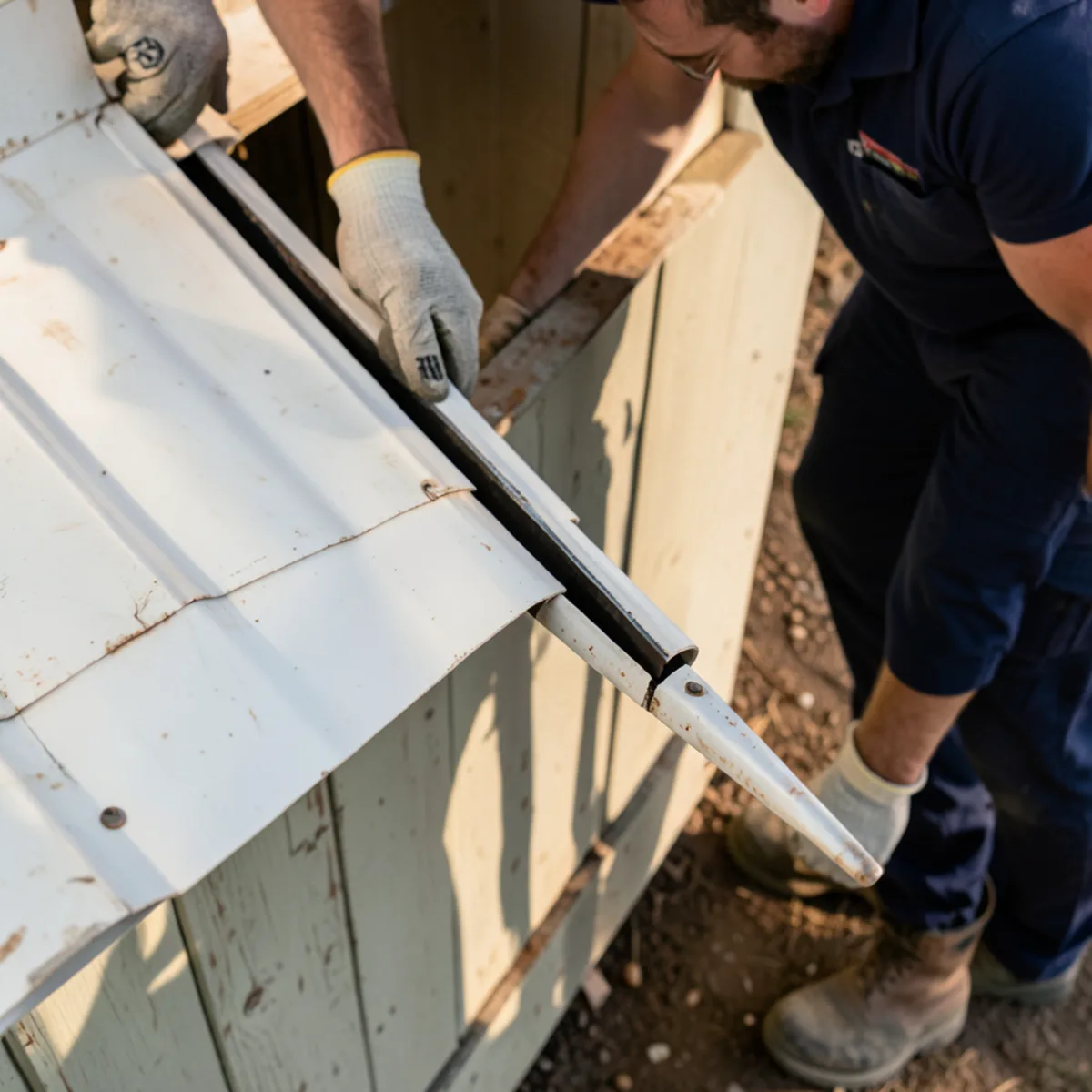
Press a screwdriver into the board near the loose hanger. Sound wood resists. Rotted wood lets the tip sink in. Look for peeling paint, dark staining and any place where the hardware spins instead of biting. Check several spots, not just the worst one.
If the wood has gone soft, the fix is carpentry plus gutter work: cut out the bad section, install sound board, seal it, then rehang. We will confirm that scope on the estimate, because how far rot runs is hard to judge until the gutter is off. Our page on fascia and soffit repair covers that side of the job.
Can you just reattach a sagging gutter?
Yes, when the wood is sound and the metal is straight. A short section with a couple of failed spikes is a reasonable fix. Do the job in this order so it holds.
- Clean the run. Never rehang a gutter full of wet debris.
- Check the board with a screwdriver along the whole run.
- Snap a line so the run falls about 1/4 to 1/2 inch per 10 feet toward the downspout.
- Remove failed spikes and fasteners.
- Set hidden hangers with screws into sound wood, about 24 inches apart, with extras near corners, ends and outlets.
- Reseal any corner or joint that moved.
- Run a hose and watch for standing water and good flow at the outlet.
Slope is the step most repairs skip. If you push a sagging gutter back flat, water still pools at the low point, and that weight starts the same cycle again. For two-story runs or anything near a power line, leave it to a crew. Sagging gutter repair covers the rehang, the slope and a water test.
Where a pull-away usually starts
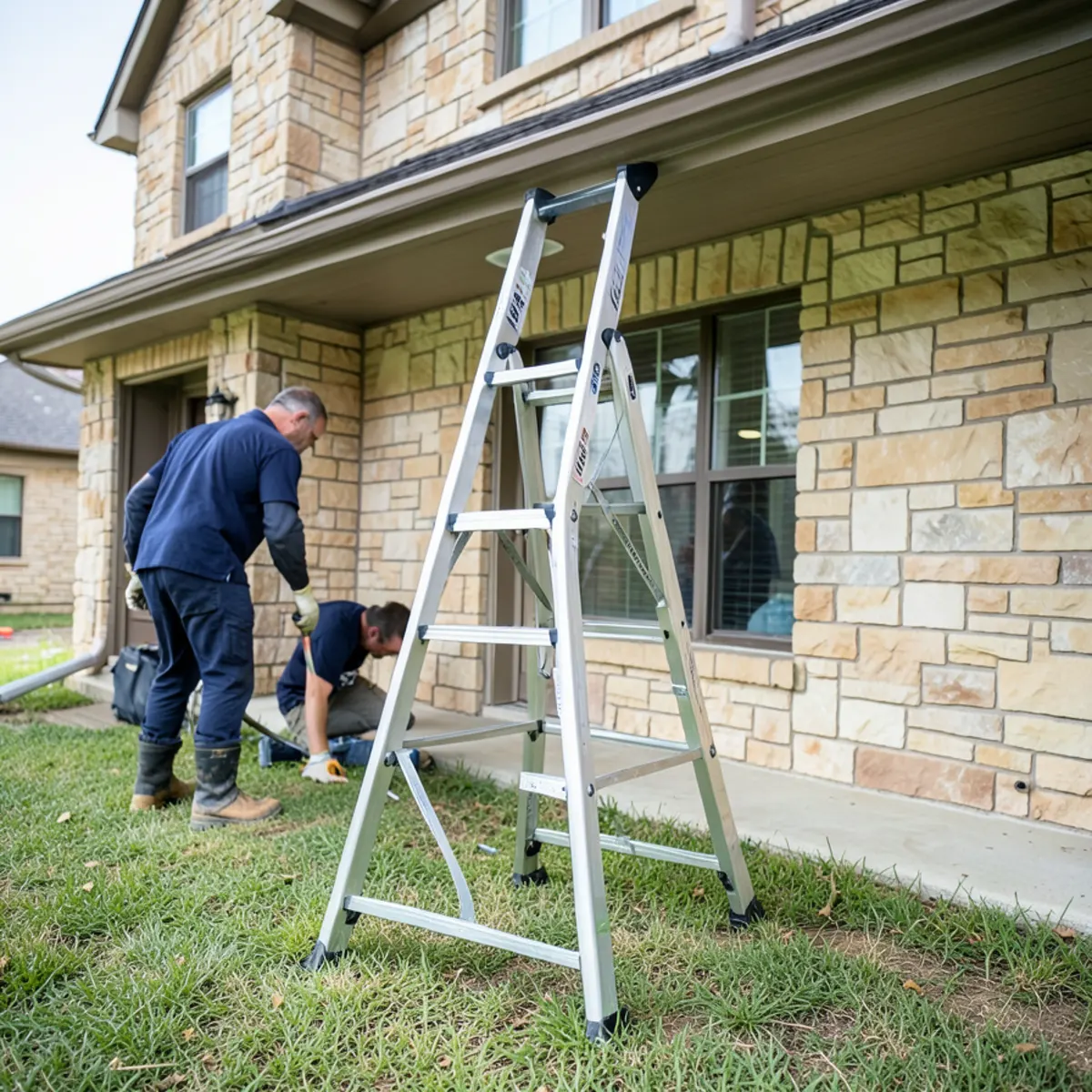
As a general pattern, the pull-away starts near a downspout or inside corner, where water and debris gather and weight stays highest. Ladders leaned on the gutter leave their own signature: a short bent section at ladder width. Long-run sag shows up on original builder-grade work, where fasteners were spaced to meet a budget.
Newer houses see it too. In fast-growing areas like Del Valle, a young gutter can still come loose if it went up with too few fasteners, so age is not the only cause. One loose run is rarely a sign of foundation trouble. Start at the fastener and the board.
Clogs are the easiest cause to prevent. If you are under trees, regular gutter cleaning keeps the weight down, and that protects the hardware.
Longer screws, hidden hangers or a full rehang?
The quick fix is a longer screw in the same hole. It can hold on sound wood, and on soft wood it only reaches further into the problem while the gutter keeps moving. Hidden hangers in fresh wood are the better repair, though the old spike holes in the gutter face still have to be sealed, and they will stay visible up close. A full rehang takes longer because the run has to come down, but it is the only way to reset the slope along the whole length and see the board behind it. If only the far end has dropped, spot repair is fair. If the line waves from corner to corner, spot repairs will chase the sag down the wall.
If a whole run has already come off in wind, skip all of this for now and read what to do first when a gutter pulls off in a storm.
When is it time to replace instead?
- The gutter has kinks or creases that will not straighten out.
- It is thin stock, and it bends when the ladder or a hand touches it.
- More than half the hardware on a run has failed.
- Joints have opened along the same run, so you would be resealing and rehanging at once.
- The fascia repair means the whole run has to come down anyway.
If so, a new roll-formed run in .027 aluminum, the minimum we hang, or heavier .032, is often the cleaner answer. See gutter replacement for how that works.
Start at the wood
A gutter pulling away is a warning, not a crisis, if you catch it early. Check the fascia, find what failed, restore the slope, and keep the run clean so the load stays where it belongs. Seen a gap at the roofline? Call before the next rain fills it. We will check the board with you and quote the rehang in writing.
Sources
Common questions
How far apart should gutter hangers be?
About 24 inches on center is the common spacing, with extra hangers near corners, ends and downspout outlets, and closer spacing in high-wind areas. If your gutter has much wider gaps, or spikes every few feet, that may be why it is sagging. Adding hangers on an otherwise sound run is usually a modest repair.
Is a gutter pulling away from the house dangerous?
Yes, it can be, mostly because of what comes next. A loose run full of water is heavy and can drop on a walkway. It also lets water run behind the gutter and soak the fascia. Keep people clear of a badly hanging section, and do not lean a ladder on it. Call for a repair before the next rain.
Why did my gutter pull away after only a few years?
Short lifespan usually points to the fasteners or the load, not to the metal wearing out. Sparse hardware, a run with no slope, or a clog that keeps water standing can loosen a young gutter quickly. Check for soft wood too, since builder fascia that was left unsealed can start to decay fast.
Will longer screws fix a gutter pulling off soft fascia?
No. A longer screw may bite for a while, but decayed wood will not keep hold of it, and the load is still pulling on the same soft board. Probe the wood with a screwdriver first. If it gives, the bad section comes out, sound board goes in, and the hangers go into fresh wood at about 24 inches on center.
About the author
Written by the crew at V&V Seamless Gutters, the Austin gutter company run by owner Victor and his son Omar. Read more about us or see what customers say.
Related service: sagging gutter repair in Austin. We also work in Del Valle.
Have a gutter question this article did not answer?
- 4.5★ from 36 Google reviews
- Free estimates
- Run by owner Victor and his son Omar