
Problem solving
Why Your Gutters Are Leaking at the Seams
By the V&V Seamless Gutters crew · Published and updated November 1, 2026
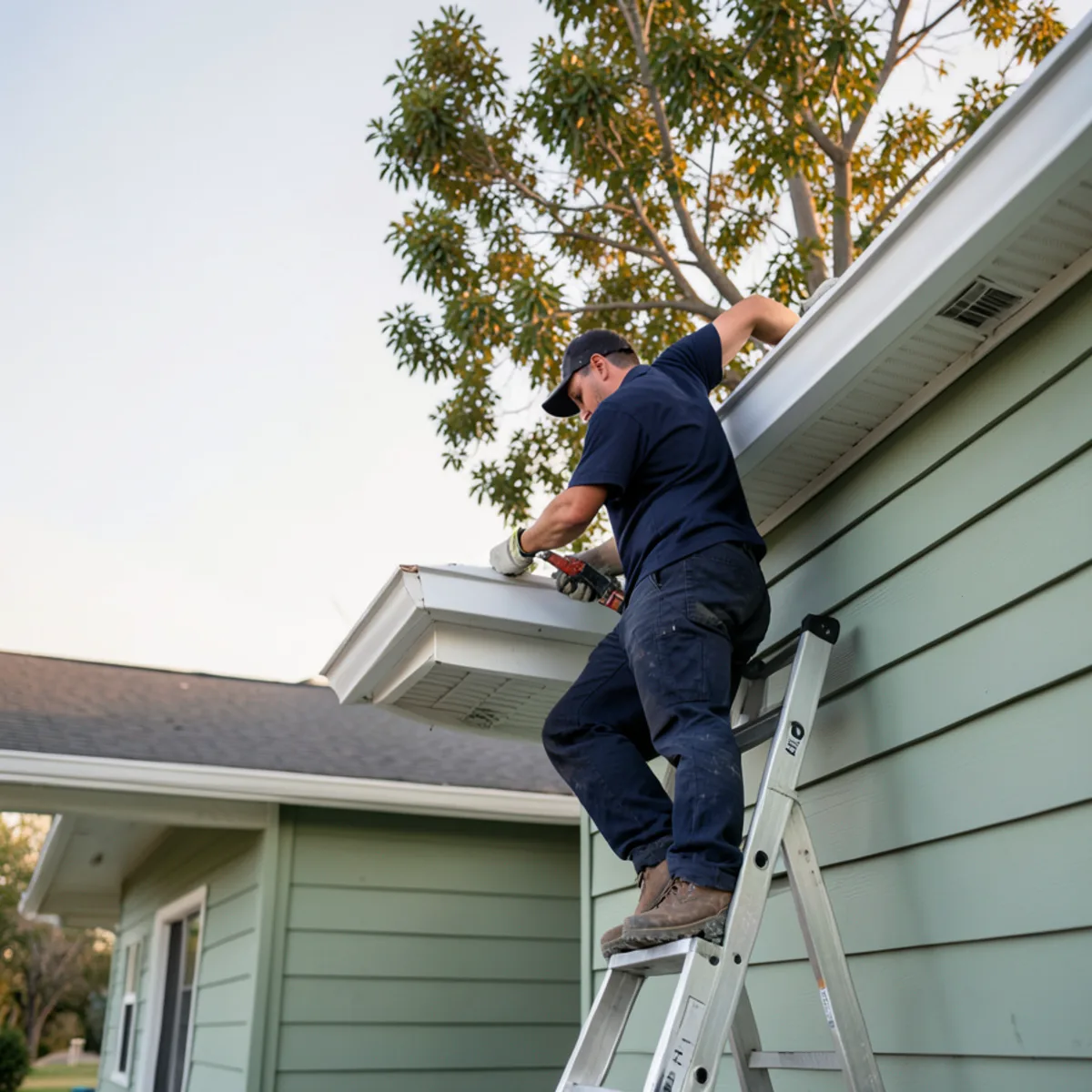
Gutters leaking at seams usually mean one of four things: sealant that has aged out, metal that keeps moving, a run that has lost its slope, or a joint that was never built well. Find out which one first, because new sealant over a sagging corner fails fast. Clean to bare metal, fix the cause, then seal.
Why are my gutters leaking at the seams?
Every joint in a gutter depends on sealant, and sealant does not last forever. How many joints you have is the first thing to check. Sectional gutters come in lengths joined by slip connectors, so a long run has a seam every few strides. Seamless gutters are roll-formed in one piece to the length of the wall, so seams exist only at corners and end caps. Fewer joints means fewer chances to leak. It does not mean zero.
| Cause | How to spot it | What fixes it |
|---|---|---|
| Aged sealant | Cracked, shrunken or peeling bead at a joint | Scrape, clean to bare metal, reseal |
| Thermal movement | Long runs, tight ends, bead torn along one edge | Reseal with a flexible gutter sealant, add room to move |
| Lost slope | Water sits in the corner after rain | Rehang first, then reseal |
| Debris dam | Wet leaves packed against the joint | Clean it, then check the seal |
| Rivets or screws loose | Joint flexes when pressed, drip at a fastener | Refasten and reseal |
| Poor original miter | Gaps at a corner, heavy smears of sealant | Rebuild or replace the corner |
Dripping corner you cannot get to stay sealed? Call and we will find the cause and quote the fix in writing.
- 4.5★ from 36 Google reviews
- Free estimates
- Run by owner Victor and his son Omar
How much does a gutter really move?
More than you would expect. Engineering ToolBox lists aluminum at about 13.1 millionths of an inch, per inch of length, per degree Fahrenheit. Take a 40-foot run and a 100-degree swing between a cold January morning and a July afternoon on metal in full sun. The math gives about 0.63 inch of change in length. Mild steel moves less than half that.
That movement has to go somewhere. It goes into corners and end caps, the same places the sealant sits. Austin's hot summers and big swings work those joints year after year. Good sealant stretches with it for a while, then hardens and tears. This is ordinary wear, and it explains why a seam can hold for years and then start dripping with no storm to blame. Length and sun set the pace. A 20-foot run moves about 0.3 inch over that same swing, half of what the 40-foot run does, and a wall in full afternoon sun works its joints harder than a shaded one. When a house has one corner that keeps failing, look at the longest sunniest run first.

Is it really the seam?
Check before you buy sealant. Plenty of water that looks like a seam leak comes from somewhere else.
- Pick a dry day. Wait until the gutter has fully drained.
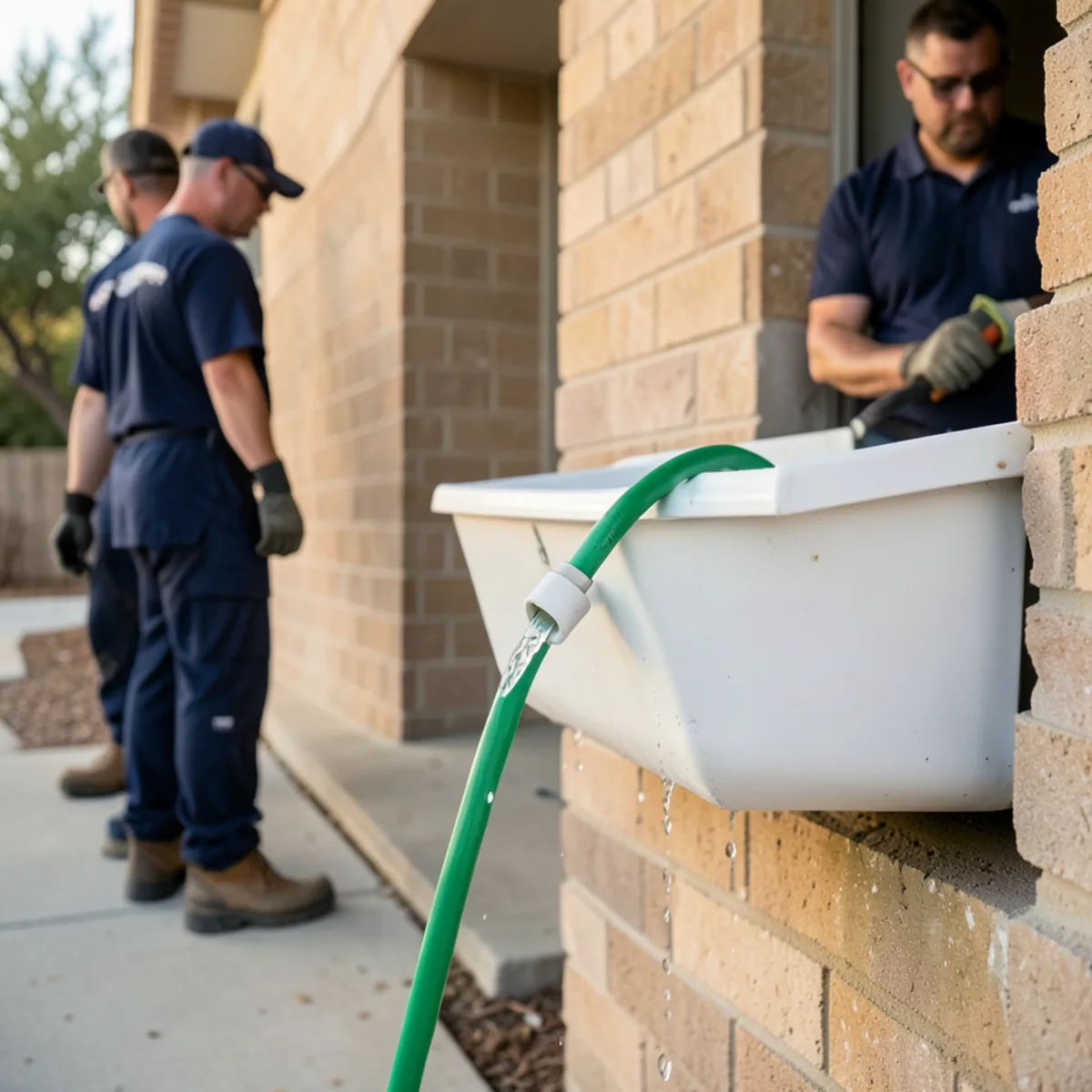
- Run a garden hose into the gutter, uphill of the suspect joint, at a low flow.
- Have someone watch from below. Note exactly where the first drop forms.
- If it drips at the joint, you have a seam leak. If water runs behind the gutter, look at the roof edge and drip edge instead.
- If it spills over the front, the gutter is overflowing, so check the downspout and the slope.
- If a drop forms along the bottom away from any joint, suspect a hole or rust spot.
Water draining down the wall behind the gutter is the most common mix-up. It often means water is getting between the gutter and the fascia, which is a different repair and a more urgent one, since it wets wood. If the board feels soft, see fascia and soffit repair before resealing anything.
Why a resealed corner starts leaking again
As a general pattern, the failed seam has been sealed more than once. Each layer went on over dirt or old sealant, so none of it bonded to metal. Thick smears at a corner are usually a sign someone fought this leak before. Inside corners take the worst of it, because water from two directions meets there and debris collects there too.
Trees add to the problem. Under mature canopy, as in Sunset Valley, wet leaves sit against joints for weeks, and joints stay damp long after the rain ends. Keep those gutters clear, at least twice a year by West Virginia University Extension's baseline, and seals last longer. Sectional runs with many slip joints tend to leak at several points as they age, while one failed corner on an otherwise sound seamless run is usually a straightforward repair.
Reseal, rebuild or replace: what each one trades
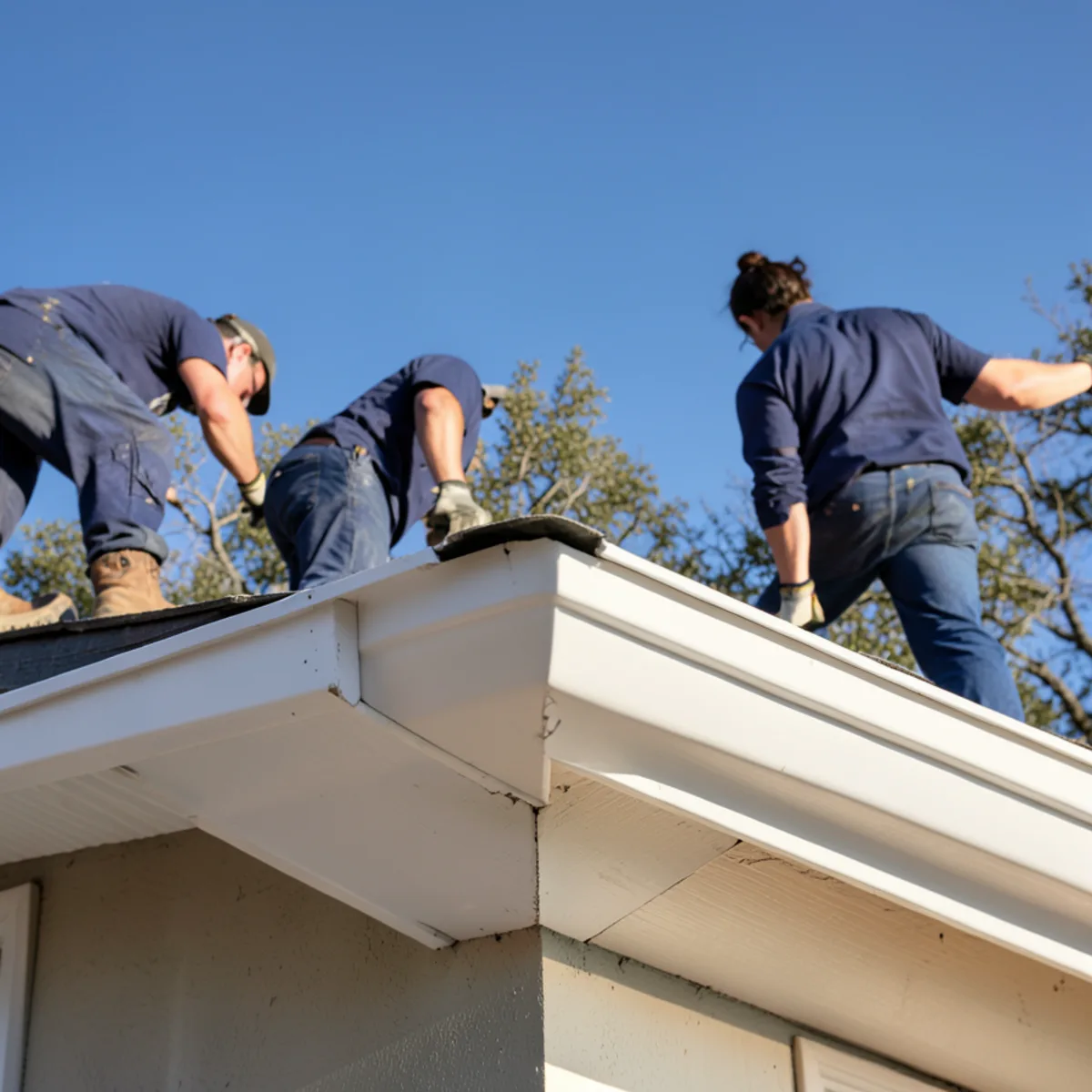
A reseal is the cheapest repair, and it is right when the joint is tight and the metal is sound. It is also the repair you are most likely to do again, because the run keeps moving. Rebuilding a corner costs more, since the joint has to be opened up, refastened and sealed from clean metal. You get a stronger joint, but new metal on an old run may not match in color. Replacing the run removes joints you would otherwise keep sealing, and you pay for good metal along the way. A sound gutter with one bad corner rarely justifies that.
How do you fix a leaking gutter seam so it stays fixed?
If you are comfortable on a ladder, this is a fair repair to try on a single joint. Skip it on a second story or a steep lot.
- Fix the slope first. A gutter needs about 1/4 to 1/2 inch of fall per 10 feet, along its full length.
- Scrape away all old sealant. Do not leave any behind.
- Clean the metal with a brush and a suitable cleaner, and let it dry fully.
- Tighten or replace loose rivets or screws in the joint.
- Apply a gutter sealant made for metal, working it into the joint and smoothing it flat.
- Let it cure for the time on the label, then test with a hose.
A mesh tape or patch product can buy time on a bad joint. Treat it as a stopgap, since it covers the leak without removing the cause. For more than a couple of joints, or leaks that keep returning, have leaking gutter repair done by someone who can see the whole run. We will tell you if the seam is the true source.
When is replacement smarter than another reseal?
- Several joints on one run are leaking at the same time.
- The gutter is thin big-box stock, often .025 or .019 aluminum, and it flexes at the joints.
- The gutter has rust through or holes along the bottom.
- It sags between hangers and has lost its slope.
- Sealing has become a yearly chore.
In those cases gutter replacement with a roll-formed run removes most of the joints. National contractor tables commonly list aluminum at 20 to 30 years, though that is not Austin data, so age alone is a weak guide. Condition tells you more.
Fix the cause, then the seam
Test with a hose, confirm the source, correct the slope, and seal only clean bare metal. Do that in order and a seam repair can be a one-time job. If a joint has been sealed twice and still drips, call us. We will run water through it, show you where the leak starts, and put the fix in a written quote.
Sources
Common questions
How long does gutter sealant last?
It varies with the product, the prep and how much the joint moves. Sealant on clean bare metal outlasts sealant over dirt or old residue by a wide margin. A long run in full Texas sun works its joints harder than a short shaded one. Check corners once a year when you clean, and reseal when you see cracks or lifting.
Can seamless gutters leak at the seams?
Yes, at the few joints they have. Seamless gutters are roll-formed in one piece along the wall, so seams appear only at corners and end caps. Those spots still rely on sealant and rivets. The advantage is fewer joints to fail, so a seamless run usually needs attention at a corner rather than along its length.
Should I seal a gutter seam from the inside or the outside?
Seal from the inside, where the water is. Sealant on the outside can stop a drip for a while, but water stays in the joint and works its way out somewhere else. Remove the old bead, clean the metal, let it dry, and work new sealant into the joint from inside the trough.
Can a corner seam leak only when the gutter runs full?
Yes. A crack high on a corner or an end cap stays dry until the trough runs deep, so light rain never finds it. That usually means a downspout, a clog or lost slope is backing water up, so run a hose test on a dry day and check the outlet before you add sealant.
About the author
Written by the crew at V&V Seamless Gutters, the Austin gutter company run by owner Victor and his son Omar. Read more about us or see what customers say.
Related service: leaking gutter repair in Austin. We also work in Sunset Valley.
Have a gutter question this article did not answer?
- 4.5★ from 36 Google reviews
- Free estimates
- Run by owner Victor and his son Omar